


By the Can-Design Team
Introduction: The Visual Economy of British Columbia
In the dense, hyper-competitive market of Metro Vancouver, your physical storefront is your most valuable silent salesperson.
It is the first handshake with your customer and the last reminder of your brand as they leave.
However, the path from a design concept to a legal, installed sign in British Columbia is filled with regulatory hurdles, landlord negotiations, and hidden design pitfalls.
For business owners, property developers, and marketing managers, the landscape of 2026 presents new challenges.
From the updated Vancouver Building By-law to the specific temporary regulations surrounding major events like the FIFA World Cup, the rules of engagement have changed.
At Can-Design, our team values a holistic approach—one that blends the “art” of visual communication with the “science” of municipal compliance. We believe that a sign is not just a marker; it is an asset.
This guide is a culmination of our decade-long experience in the Lower Mainland.
It aggregates every lesson we have learned from navigating the strict heritage rules of Gastown to executing massive retail rollouts in the Okanagan.
This is your permanent roadmap to mastering visual graphics in Western Canada.
Part 1: The Strategy of “Invisible Friction”
Mastering Your Environment Before You Build
Before a permit is signed or a sign is hung, we must address a concept we call “Invisible Friction”
In our experience, many brick-and-mortar businesses fail not because their product is poor, but because their physical space is confusing.
This foundational concept is explored in depth in our guide on Solving the Invisible Friction: Environmental Graphics & Wayfinding.

Our team values Human-Centric Navigation. When a customer enters a space, they possess a limited amount of “cognitive energy.”
Every time they have to stop and ask, “Where is the elevator?” or “Is this the line for returns?”, that energy depletes.
This is friction.
If there is too much friction, the customer leaves without buying.
Lessons from the UBC Signage System
To understand how to solve this, we look to our extensive work with the University of British Columbia. As we detailed in Campus Wayfinding in Vancouver: Lessons from the UBC Signage System, a university campus functions like a small city.
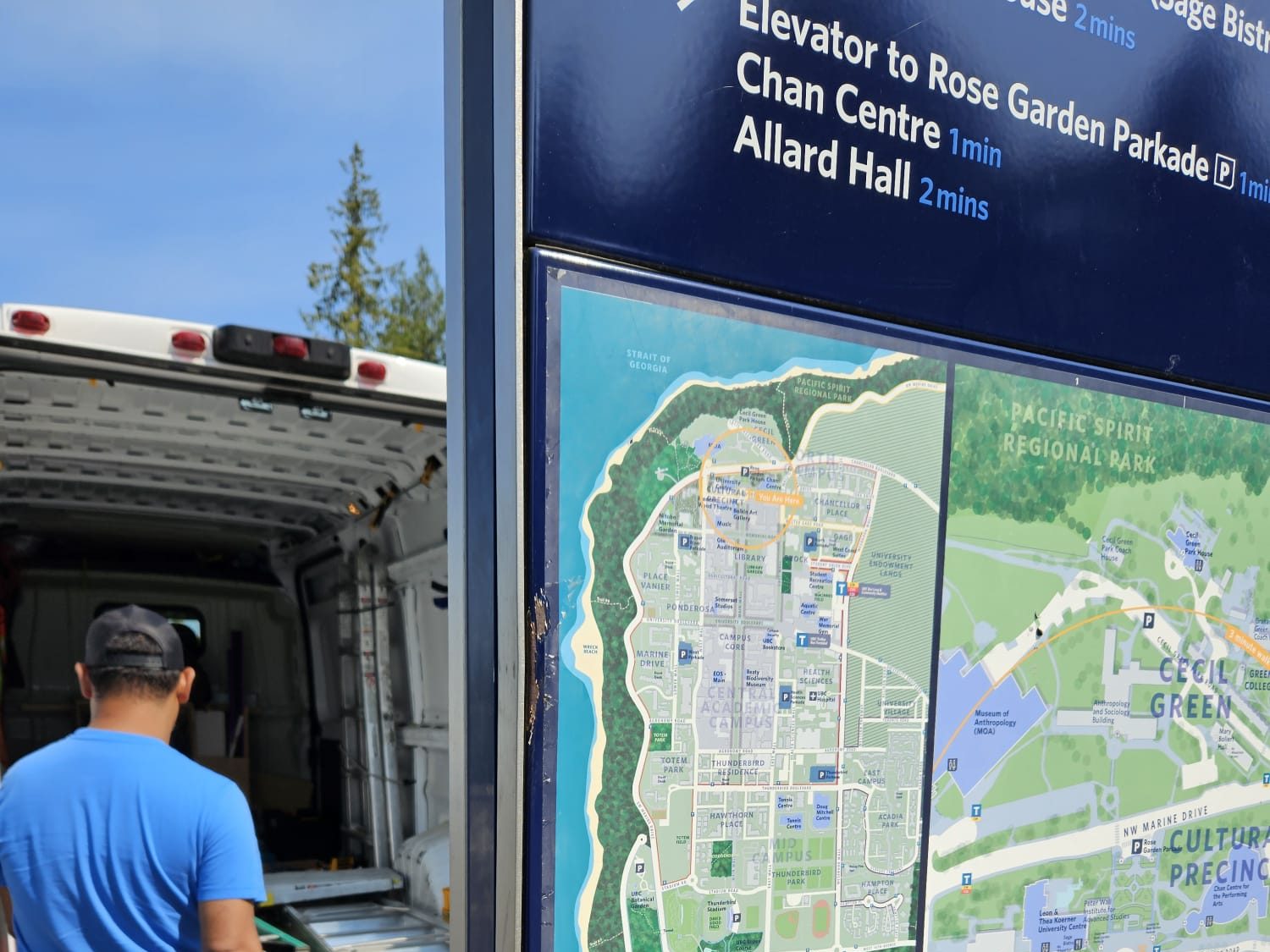
The 5-Second Rule: Our team believes that a user should be able to orient themselves within five seconds of entering a new zone. If they cannot, the wayfinding system has failed.
Iconography Over Text: In a multicultural hub like Vancouver, relying solely on English text is a mistake. We utilize universal iconography to bypass language barriers.
Consistency Builds Trust: If the parking garage signage uses blue Helvetica, and the lobby signage uses red Times New Roman, the user subconsciously feels a “break” in the system. This dissonance creates anxiety.
Environmental Graphic Design (EGD) as a Sales Tool
Moving beyond simple wayfinding, Environmental Graphic Design (EGD) is the art of turning “dead space” into brand value. In a retail environment, walls, floors, and windows are often underutilized.
The “Path to Purchase”: We use floor decals and directional wall graphics to subtly guide customers through a specific journey—usually ending at high-margin products.
Privacy with Purpose: In office settings, glass partitions are necessary for light but bad for privacy. Instead of blocking the light, we use custom-frosted window films that incorporate brand patterns.
Part 2: Navigating the 2026 Vancouver Signage Bylaws
If design is the engine of your project, the Vancouver Sign By-law is the road. And in 2026, that road has speed bumps. Vancouver’s regulatory environment is one of the strictest in North America.
Our team values “Compliance-First Design.” We know that a $451 permit fee is a small price to pay compared to the fines associated with non-compliant installations.
For a complete breakdown of the current rules, refer to our Vancouver Signage Bylaw Explained: 2025/2026 Guide.
The 2026 Fee Structure and Penalties
As of January 1, 2026, the City of Vancouver has updated its fee schedule. Business owners must budget for these costs early:
Standard Sign Permit: The base fee is $451.00. This covers the administrative review and one standard field inspection.
Director of Planning Review: If your sign is in a “Special Sign District” (like Chinatown, Gastown, or Yaletown), it triggers a secondary review costing $1,070.00.
Electrical & Engineering: Illuminated signs require a separate electrical permit (approx. $229.00). Furthermore, recent seismic updates mean projecting signs often require a Schedule B from a structural engineer.
The “Double Fee” Penalty: If you install a sign before your permit is issued, the City automatically doubles the application fee as a punitive measure.
Technical Specs: The “Frontage Math”
One of the most confusing aspects for new business owners is how Vancouver calculates allowable sign size.
The Formula: Typically, you are allowed between 0.075 m² and 0.30 m² of sign area for every linear meter of building frontage.
Sandwich Boards: These are heavily regulated. You are allowed one per business. It cannot exceed 90 cm x 60 cm. Crucially, it must be placed against your building, not at the curb. Placing it at the curb interferes with pedestrians and is the #1 reason these signs get confiscated.
Part 3: Regional Variations: Burnaby vs. Surrey
A common mistake is assuming that “Metro Vancouver” follows one set of rules. It does not. Crossing Boundary Road from Vancouver into Burnaby changes the entire legal framework.
Our team values “Municipal Adaptation.” We ensure your brand identity remains consistent, even if the physical mounting must change to satisfy different city planners.
Burnaby: The “District Harmony” Standard
Burnaby approaches signage differently than Vancouver. As outlined in our Burnaby Signage Bylaw 2025/2026 Update, the city is often more concerned with “District Character” than raw math.
Comprehensive Sign Plans (CSPs): If you are opening in a major development like The Amazing Brentwood or Metrotown, you must follow the Comprehensive Sign Plan of that specific development. These plans are extremely strict, often dictating the exact font height and color temperature of LEDs.
The 2026 Portal Update: Burnaby has transitioned to the “My Permits Portal.” This digital-first system requires high-resolution technical elevations and structural seals upfront.
Surrey: Fighting “Visual Clutter”
Surrey is the fastest-growing city in the province, and its 2025/2026 bylaw updates reflect a desire to “clean up” the visual landscape. For a deep dive, see our Surrey Signage Bylaw Master Guide.
Prohibited Types: Surrey has a widespread ban on signs that contribute to “visual clutter,” including flashing signs and inflatable advertising devices.
Setbacks and Safety: Surrey is very strict about setbacks. Freestanding (pylon) signs must be set back a specific distance from the property line to ensure they do not block sightlines for drivers.
Part 4: The Landlord Factor: Securing Approval Fast
You have designed the perfect sign. You have checked the City bylaw. But you are still not ready to install. You must clear the final, and often most difficult, hurdle: The Landlord.
Our team values “Proactive Documentation.” Landlords are protective of their building envelopes. To help you navigate this, we developed a strategy in our guide on Landlord Signage Approval in Vancouver: How to Get Approved Fast.
The “Graphics Package” Strategy
To get approval fast, we never just send a landlord a simple email. We create a professional “Signage Approval Package.” This document speaks the landlord’s language:
Photorealistic Mockups: We overlay the proposed sign onto a photo of the building. This proves to the landlord that the sign fits the “vibe” of the plaza.
Mounting Methodology: We explicitly detail how the sign is attached (e.g., “non-corrosive stainless steel fasteners sealed with architectural silicone”)
Removal Promise: We often include a note about how the sign can be removed at the end of the tenancy with minimal scarring to the facade.
Expert Tip: Review your lease’s “Schedule C” (Sign Criteria). Many tenants sign their lease without reading this section, only to find out later that the landlord requires expensive channel letters and bans cheaper cabinet signs.
Part 5: Case Study: Scalability with BC Liquor
The true test of a signage partner is not doing one sign well—it is doing 200 signs well, simultaneously.
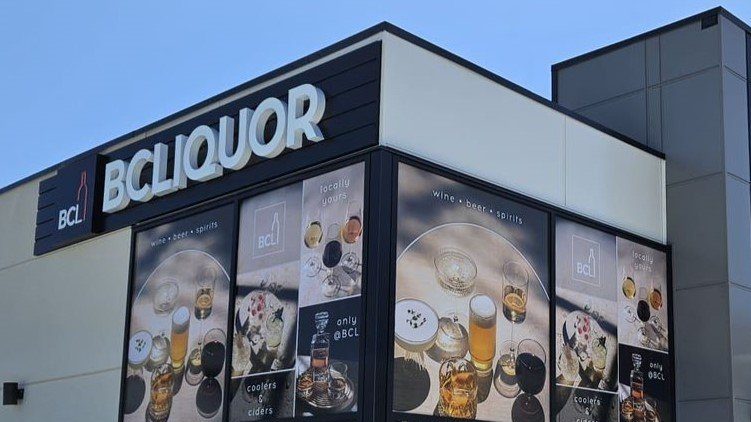
Our team values “Logistical Precision.” Our ongoing work with BC Liquor (BCL) serves as the ultimate case study in provincial scalability. As detailed in our Retail Graphics Case Study: BC Liquor, BCL operates nearly 200 locations across British Columbia, from the temperate rainforest of Vancouver Island to the harsh winters of Prince George.

The Challenge: Consistency Across Climates
A vinyl graphic that works in Vancouver might fail in the Okanagan.
UV Resistance: In the Okanagan interior, the summer sun is intense. Standard vinyls will fade and crack within two years. For BCL locations in these zones, we utilize high-grade, UV-laminated vinyls.
Moisture Management: On the coast, the challenge is humidity. Installing window graphics in a rainy November requires specific “high-tack” adhesives.
The “1,100 Panel” Solution
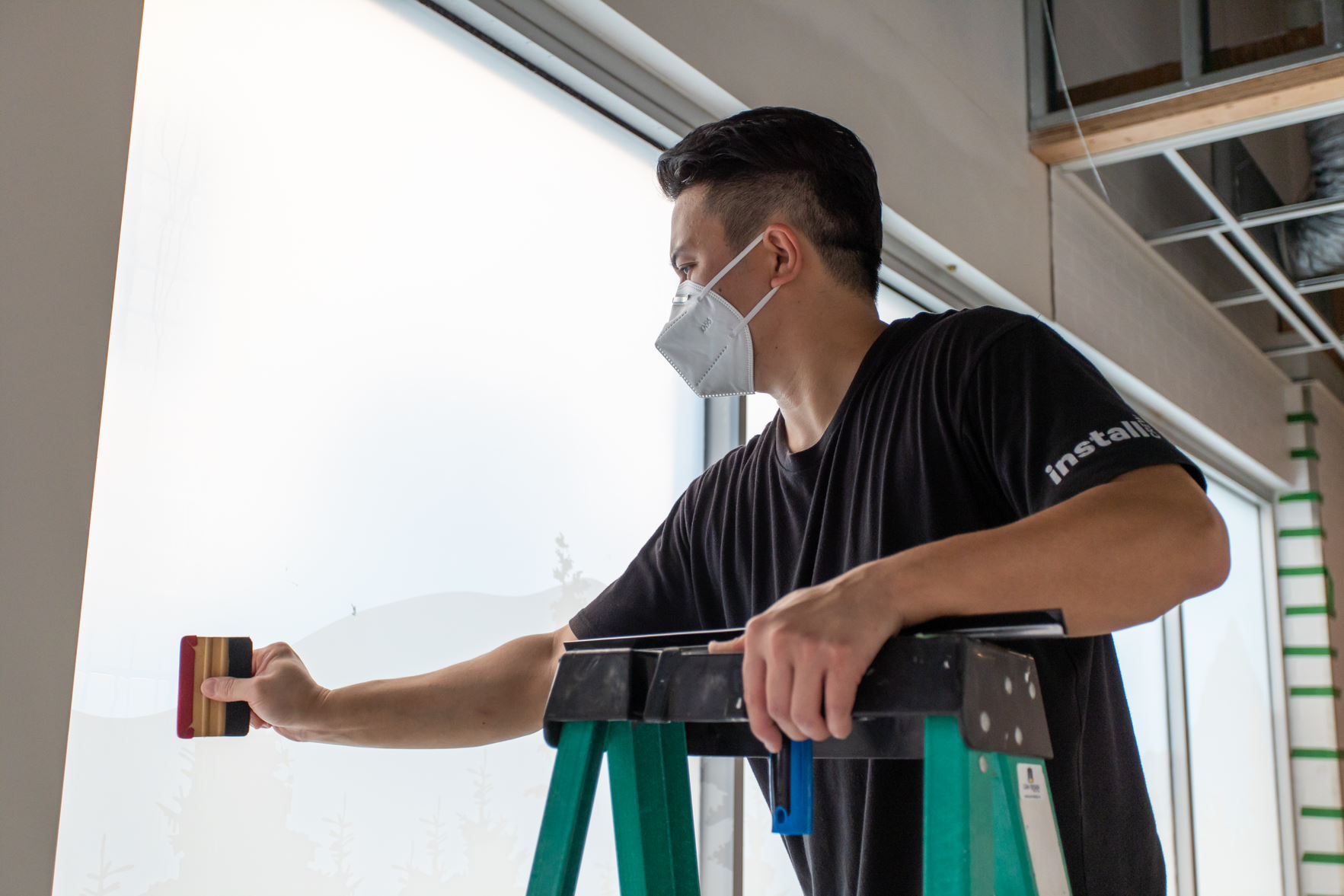
For a recent rollout, we were tasked with installing over 1,100 panels of custom window frosting. The goal was to balance privacy with an open, inviting retail look.
Site Checks: No two BCL stores are exactly the same age or size. Our team conducted individual site checks to measure the window mullions down to the millimeter.
The “Kit” Approach: We kitted and labeled every graphic for every specific store. Store #102 in Kelowna received a box specifically packed for their window configuration.
Part 6: Vancouver’s Neon Identity: Bridging History and Modernity
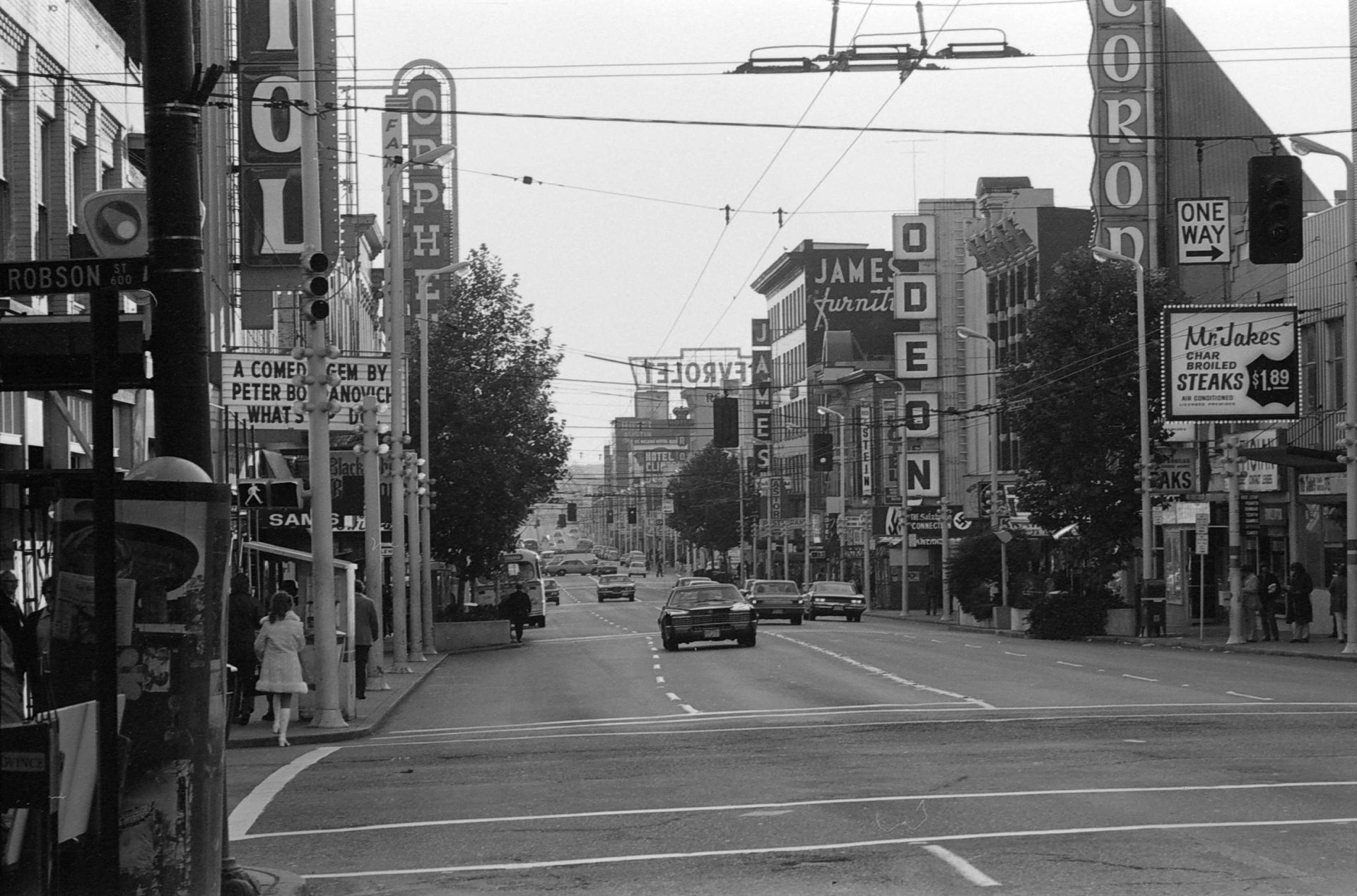
Vancouver was once the neon capital of the world, boasting over 19,000 signs in the 1950s. Today, after decades of “anti-neon” bylaws, the light is returning.
Our team values the “Heritage Aesthetic.” We help businesses tap into this nostalgia while using modern, sustainable technology. For a historical perspective, read Vancouver’s Neon Past: How the City Became the World’s Neon Capital.
The Neon Districts
The City has designated specific areas—Granville Street, Chinatown, and Gastown—as “neon-encouraged” zones.
Granville Street: The bylaws here actually require a certain level of brightness and animation to maintain the “Theatre Row” atmosphere.
Chinatown: Here, the focus is on cultural heritage. We often design signs that incorporate bilingual text and vertical orientation, mimicking the historic streetscapes.

LED-Flex: The Modern Solution
While we love the look of traditional glass neon, it is impractical for many modern businesses. Our solution is LED-Flex:
Safety: It runs on safe 12V or 24V power.
Durability: It is made of silicone or PVC, making it virtually shatterproof—essential for street-level signage.
Efficiency: It uses 90% less energy than gas neon.
Part 7: High-Stakes Graphics: Trade Shows and Events
Not all signs are permanent. For many B2B businesses, their most important storefront is their 10×10 booth at the Vancouver Convention Centre.
Our team values “Impact over Density.” The most common mistake we see, as highlighted in our Vancouver Trade Show Booth Mistakes guide, is the “Book on a Wall” approach.
The 3-Second Rule
At a trade show, you have three seconds to capture a lead.
Tier 1 (Long Range): Your Logo and Brand Color. This must be visible from 30 feet away.
Tier 2 (Mid Range): A 5-word value proposition. “We Fix Leaky Condos.”
Tier 3 (Short Range): Contact info and detailed bullet points. This is only for people who have already stepped into your booth.
Materials Matter
We recommend Tension Fabric displays over rigid boards or vinyl banners. Vinyl reflects harsh overhead lighting, creating glare that makes text unreadable. Fabric absorbs the light, ensuring your brand looks premium in social media posts.
Part 8: The 7 Common Pitfalls to Avoid
To conclude this master guide, we have compiled the ultimate checklist of failure points from our article 7 Common Mistakes Metro Vancouver Businesses Make with Signs & Graphics.
Bylaw Blindness: Designing a beautiful sign without checking the zoning first.
Material Mismatch: Using “Economy” vinyl for outdoor signs. In Vancouver’s rain, these will peel in 6 months.
The “Legibility Test”: Using a thin, script font that disappears from 20 feet away.
Landlord Lag: Signing a lease without negotiating signage rights.
DIY Installation: Asking a contractor friend to hang a sign. If it falls, you are liable.
Ignoring Maintenance: A sign with burnt-out letters signals neglect to customers.
Poor Contrast: Always aim for high contrast (Light on Dark, or Dark on Light) for readability.
FAQ Section
Q: How much does a sign permit cost in Vancouver in 2026? A: As of January 1, 2026, the standard application fee is $451.00, plus potential surcharges for electrical connections ($229) or complex planning reviews ($1,070).
Q: Can I use a sandwich board in Vancouver? A: Yes, but strict rules apply. It must be 90 x 60 cm or smaller, limited to one per business, and placed directly against the building frontage—never on the curb or blocking the sidewalk.
Q: What is the “FIFA World Cup By-law”? A: It is a temporary regulation effective May–July 2026. It allows the City of Vancouver to rapidly remove unauthorized commercial signage near BC Place and Hastings Park to protect event sponsors.
Q: Why is my landlord asking for a “Schedule B”? A: A Schedule B is a structural engineering assurance. If your sign is heavy or projects over a public sidewalk, the landlord (and the City) requires a registered engineer to certify that the building wall can support the weight.
Q: What is the difference between Burnaby and Vancouver sign rules? A: Vancouver rules are generally based on “frontage math” (size based on building width). Burnaby rules rely heavily on “Comprehensive Sign Plans” specific to each development district.
The visual landscape of your business is too important to leave to chance.
Whether you are battling a difficult permit application, planning a province-wide retail expansion, or simply trying to get your first sandwich board approved, Can-Design is your partner.
We value the intersection of creativity and compliance. Let us handle the friction so you can focus on your business.
[Book a Consultation with our Metro Vancouver Graphics Experts Today]