


Long before Vancouver was known for glass towers and mountain views, it was famous for its electric glow.
By the 1950s, Vancouver had more neon signs per capita than almost any city in the world — even outshining Las Vegas.

From Granville Street to Chinatown, neon signs turned the city into a night-time spectacle of light, colour, and motion.
They weren’t just advertisements — they were part of Vancouver’s identity.
Today, only a handful remain, preserved as heritage pieces or adapted for new uses.
???? See historic photos in the Vancouver Sun archive
The Rise of Neon in Vancouver
- First Sign (1927): Vancouver’s first neon sign was installed at a shoe store on Granville Street. At the time, neon technology was still new and imported from Paris and Los Angeles.
- Rapid Growth: Within two decades, neon exploded across theatres, car dealerships, nightclubs, and restaurants. The glowing tubes allowed for bright colours, animated effects, and bold typography that painted signs could never match.
- Peak Glow: By the 1950s, Vancouver had an estimated 19,000 neon signs, creating a continuous “canyon of light” that defined the skyline.

Famous Examples of Vancouver Neon
Vogue Theatre (Granville Street)
Opened in 1940, the Vogue Theatre remains one of Vancouver’s most iconic neon landmarks. Its Art Deco tower and glowing figure of Diana the Goddess of the Hunt still light up Granville Street today. The theatre is now recognized as a National Historic Site, making it a rare surviving example of Vancouver’s neon era.

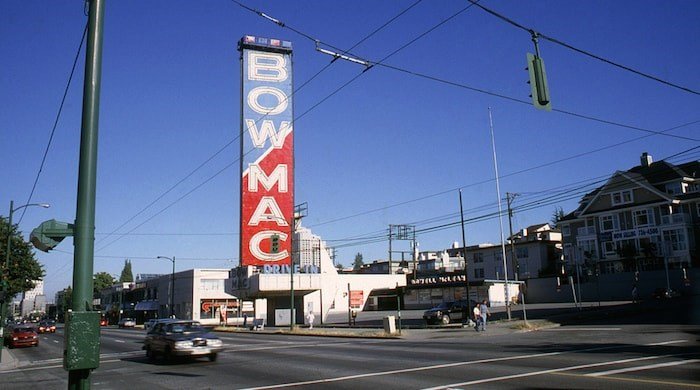
BowMac Sign (West Broadway)
Erected in 1958 for the Bowell McLean car dealership, the BowMac sign stood nearly 80 feet tall — making it one of the largest neon signs in North America at the time. Its bright glow was visible from miles away, creating a landmark for Broadway. Later adapted for Toys “R” Us, the sign is now a protected heritage landmark even as the retail landscape has changed.
Chinatown’s Neon Glow
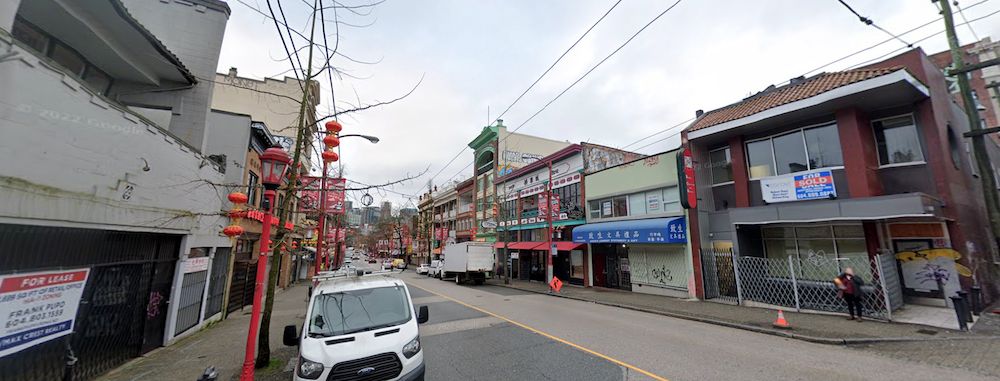
By the mid-20th century, Vancouver’s Chinatown rivaled Granville Street in its neon density. Restaurants and businesses used vibrant signs to express cultural identity and attract visitors. Some of the most famous survivors include:
- The Ho Ho Chop Suey neon sign, restored as a heritage piece.
- The glowing Sai Woo rooster, one of Vancouver’s most photographed neon icons.
- Other cultural landmarks highlighted in the City of Vancouver’s Chinatown history.

???? Related: Cultural Identity in Signage – KPU Case Study
Theatre Row – Granville Street
Granville Street once formed a “canyon of neon,” with stacked marquees lining dozens of theatres. This entertainment hub gave Vancouver its reputation as the “Neon Capital of the World.”
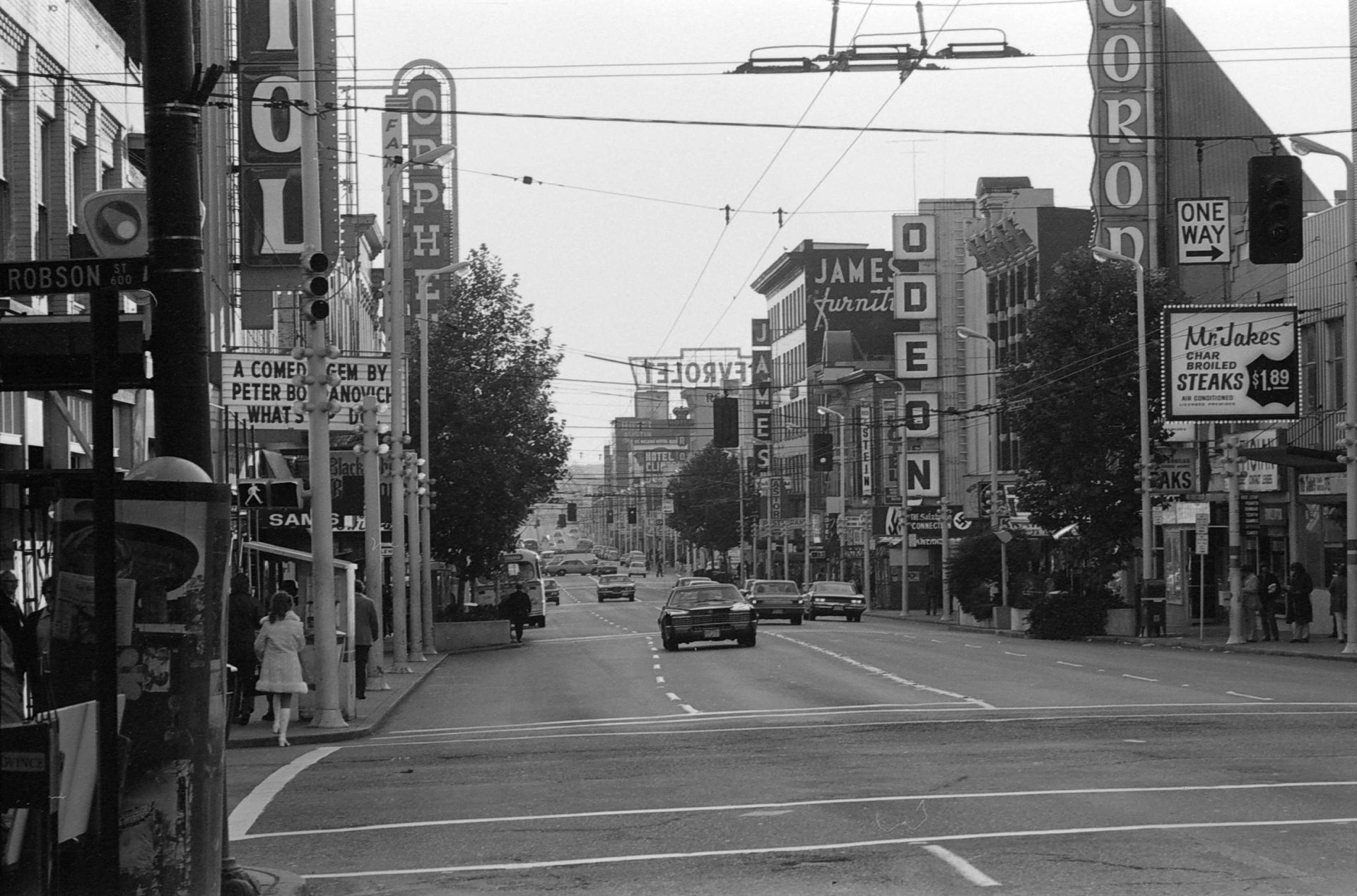
- Orpheum Theatre – Still operating today with a restored marquee.
- Capitol Theatre – Once a major neon beacon, demolished in the 1970s.
- Strand Theatre – Another lost classic that helped shape Granville’s nightscape.
???? Related: Campus Wayfinding Lessons from UBC
Gastown & Downtown Core
Gastown also played a role in Vancouver’s neon boom, especially during the jazz and nightlife eras of the 1940s–60s. Many signs disappeared during redevelopment in the 1970s, but preservation groups such as the Heritage Vancouver Society continue to advocate for their recognition.

Other Landmark Neon Signs
While less famous than the Vogue or BowMac, several smaller signs remain cultural touchpoints:
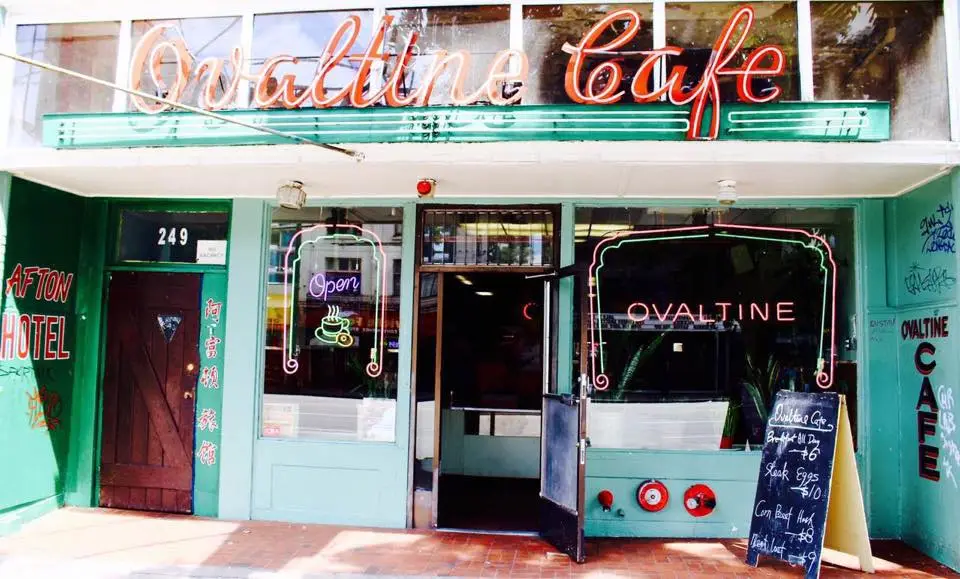
- Ovaltine Café (Hastings Street) – A classic diner neon sign that still welcomes visitors.
- Save-On-Meats (Gastown) – The giant neon cleaver remains one of Vancouver’s quirkiest icons.

The Backlash and Decline
By the 1960s, neon fell out of favour. What was once celebrated as modern and glamorous was rebranded as “visual pollution.”
- City Crackdowns: Vancouver’s City Council began restricting new neon permits, and many existing signs were dismantled.
- Cultural Shift: Backlit plastic and fluorescent-lit box signs replaced neon as the city sought a more “clean” and “modern” aesthetic.
- Granville Street Fades: The once-dense canyon of neon slowly dimmed as theatres closed and retailers modernized.
Preservation and Revival
Although neon’s boom was cut short, recent decades have seen renewed appreciation.
- Museum of Vancouver Exhibit: “Neon Vancouver/Ugly Vancouver” showcases dozens of salvaged and restored signs, highlighting their cultural significance.

- Survivors on the Street: Landmarks like the Vogue Theatre and BowMac sign still glow, keeping the memory alive.

- Cultural Tourism: Neon is now celebrated as part of Vancouver’s design heritage, drawing photographers, filmmakers, and history buffs.
What It Means for Businesses Today
True neon is rare today due to cost, regulations, and maintenance. However, its aesthetic and cultural impact remain timeless.
- Modern Alternatives: Businesses can achieve the neon look using LED or faux-neon lighting, which is energy-efficient and bylaw-compliant.
- Design Legacy: Neon’s principles of visibility, bold typography, and colour continue to influence modern signage and large-format graphics.
- Compliance First: To replicate neon’s glow today, businesses must navigate Vancouver’s current signage rules.
???? Explore our Vancouver Signage Bylaw Guide
Conclusion
The story of Vancouver neon signs history is more than just glowing tubes — it’s about how signage shapes the identity of a city.
From the towering BowMac sign to the glowing Vogue Theatre and vibrant Chinatown streets, neon once defined Vancouver nights. While regulations dimmed that glow, the design legacy remains.
At Can-Design, we help businesses capture that same visibility and impact with modern signage solutions — built to last, compliant with bylaws, and inspired by history.
Frequently Asked Questions About Vancouver Neon Signs
Why did Vancouver ban neon signs?
By the 1960s, neon was increasingly criticized as “visual pollution.” City Council introduced restrictions on new neon permits, aiming for a cleaner, more modern look. This shift led to the removal of thousands of signs, replaced by backlit plastic and fluorescent-lit signage.
Where can I see neon signs in Vancouver today?
While most neon was removed, several landmarks still glow today:
- Vogue Theatre neon on Granville Street.
- The towering BowMac sign Vancouver on West Broadway.
- Chinatown neon Vancouver, including the Sai Woo rooster and Ho Ho Chop Suey signs.
- The Museum of Vancouver’s “Neon Vancouver/Ugly Vancouver” exhibit, which houses dozens of restored signs.
When was the first neon sign installed in Vancouver?
Vancouver’s first neon sign was installed in 1927 at a shoe store on Granville Street. This marked the beginning of neon’s rise, which by the 1950s had transformed Vancouver into one of the brightest neon-lit cities in the world.
What is the most famous neon sign in Vancouver?
The two most famous signs are:
- The Vogue Theatre neon, preserved as a heritage landmark and National Historic Site.
- The BowMac sign Vancouver, once the largest neon sign in North America, now protected as a cultural landmark.
Can businesses still use neon signs in Vancouver today?
Yes — but with restrictions. True neon is rare due to high costs, energy usage, and bylaw regulations. Most businesses now use LED-based faux-neon signs, which recreate the glow while remaining energy-efficient and compliant with modern signage rules.
???? Contact Us To Get Your Future Sign Sorted Out