


Thinking of installing a new sign in Vancouver? Here’s exactly what the City requires
This guide will help you:
- Stay compliant with Vancouver’s sign regulations.
- Avoid fines or costly redesigns.
- Design signage that supports branding and customer experience.
Why Vancouver Has a Sign Bylaw
Vancouver’s Sign By-law Overview is designed to:
- Support local commerce through proper business identification.
- Prevent clutter and preserve sight lines.
- Enhance neighbourhood character.
The rules apply to all signs on private property, as well as signs that project into streets or lanes.
Do You Need a Sign Permit?
Signs that require A PERMIT:
- Signs on private property.
- Awnings on commercial or industrial buildings at the first floor or below.
(Vancouver Sign Permit Information)
Signs that are EXEMPT:
- Building numbers, street names, commemorative plaques, and safety signs up to 0.20 m².
- Banner signs (with size and location limits).
- Directional, temporary, window, real estate, and projected image signs (all with specific conditions).
(City of Vancouver Sign By-law)
The Permit Process (Quick Overview)
- Identify your sign type and confirm if a permit is needed.
- Submit your application, including documents and fees (standard fee: $432; additional charges for electrical or engineering review).
- Install and inspect the sign within 12 months. Permits expire if unused.
(Sign Permit Application Process – Vancouver)
Sign Types at a Glance
Banner Signs
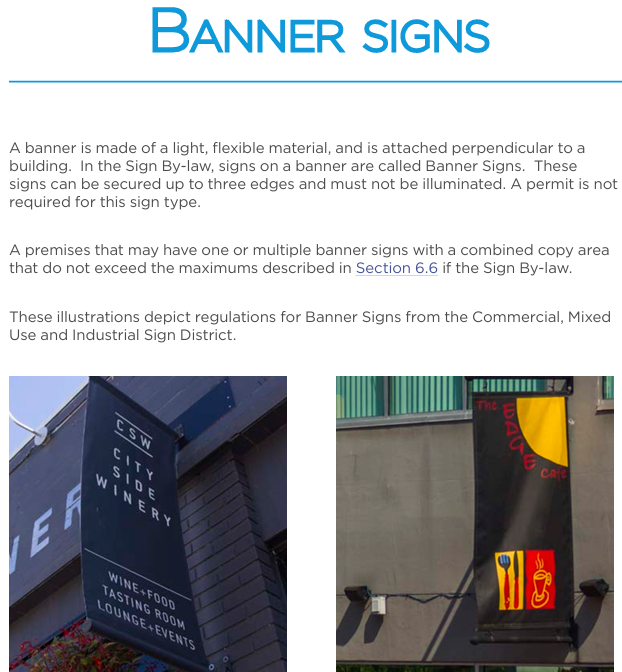
- Exempt if under 4 m² and compliant with district rules.
Projecting Signs
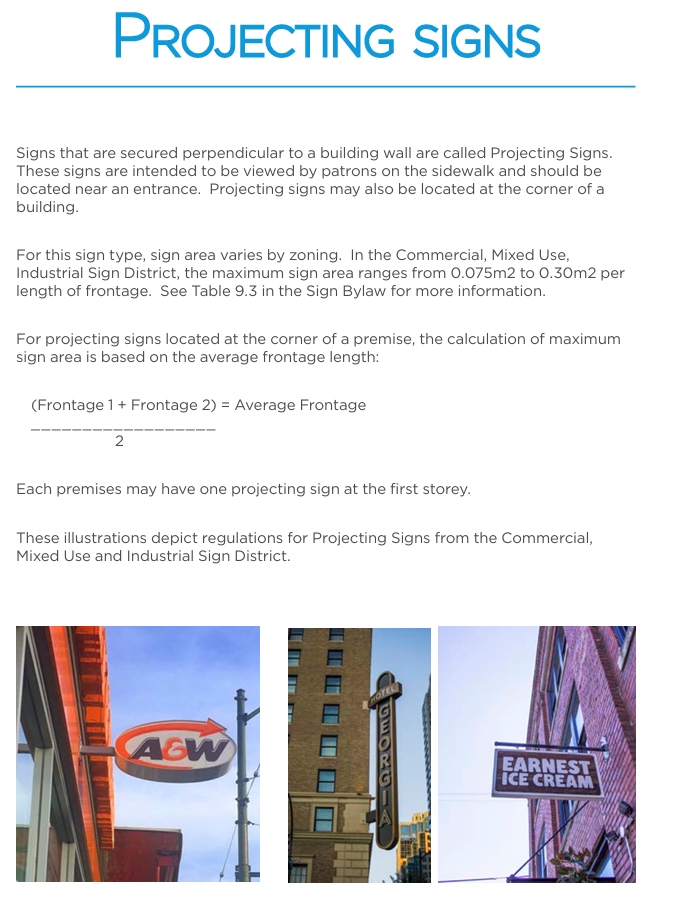
- Size allowance based on building frontage (0.075–0.30 m² per frontage length).
- Only one per premises.
- Permit required.
Window Signs
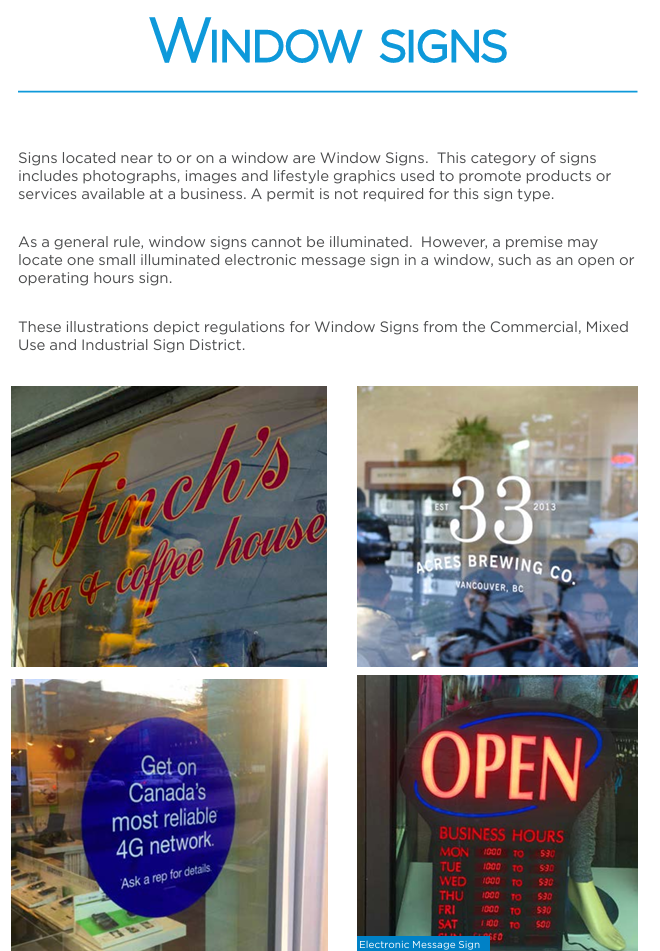
- Exempt from permits.
- Illumination allowed only for electronic or neon signs with strict limitations.
Design-Friendly Tips That Stay Compliant
- Neon and animated signs: allowed in certain districts but subject to strict controls.
- Wayfinding and accessibility: orientation and placement are as important as visibility.
- District character: Granville Street and Chinatown allow special treatments (e.g., neon heritage).
Avoiding Costly Mistakes
- Sandwich boards: only one per storefront, max 90 × 60 cm, must be adjacent to the building. Anything on curbs or boulevards risks confiscation.
- Portable signs: highly restricted; non-compliance can mean fines and removal.
Your Compliance & Design Roadmap
- ☐ Identify your sign type and district.
- ☐ Confirm if a permit is required.
- ☐ Sketch your concept and check size/illumination limits.
- ☐ Submit your application with all required documents.
- ☐ Install only after approval and inspection.
- ☐ Monitor for bylaw updates and refresh signage when needed.
Need help designing, permitting, and installing signage that looks great and complies with Vancouver bylaws?
We handle everything—from design concepts to engineering and permits—so you don’t risk delays, fines, or rework.
???? Book a consultation today
Sources & References
- City of Vancouver – Sign By-law Overview
- City of Vancouver – Sign Permit Information
- City of Vancouver – Sign By-law (Full PDF)
- City of Vancouver – Sign By-law User Guide (Business Identification)
- Sandwich Board Sign Rules (PDF)
SHARE THIS POST