


In the current Metro Vancouver commercial landscape, the traditional “Rip-and-Replace” renovation model is broken.
Between ballooning construction costs—rising at nearly double the rate of inflation—and the persistent “Wet Coast” climate, property owners are facing a crisis of asset devaluation.
Whether you are managing a Class-A office tower in Downtown Vancouver or a boutique retail space in Kitsilano, your physical environment is either working for you or against you.
Most owners focus on the material—the sticker, the sign, the film.
But in 2026, the material is just the vehicle. The value is in the Design Strategy.
I. The “Atmospheric River” Problem: Why Your Exterior is Failing

In the Pacific Northwest, we don’t just have weather; we have a relentless chemical and structural assault.
Vancouver averages over 160 days of rain per year, but for a business owner, the statistic that matters more is the Time-of-Wetness (ToW).
This is the duration that a building’s exterior surface remains saturated.
In Metro Vancouver, during the peak months of November through March, your exterior graphics are essentially “submerged” in a suspended state of moisture for weeks at a time.
The Hidden Costs of Environmental Neglect
When exterior branding fails—whether it’s a peeling storefront wrap in Gastown or a faded development sign in Coquitlam—the damage goes beyond aesthetics. It signals a lack of operational discipline to investors, partners, and high-value tenants. In a real estate market as competitive as the Lower Mainland, a “distressed” exterior implies a distressed asset. The “hidden cost” is the erosion of brand equity; if you can’t maintain your front door, how can you maintain your service?
The Humidity Trap: The Science of Emulsification
In low-lying areas like Richmond, Delta, and North Vancouver’s waterfront, the humidity levels are a constant variable. Standard “commodity” adhesives—the kind often used by shops that compete solely on price—are often water-based or low-grade solvent acrylics.
The Process: Under constant 80%+ humidity, these adhesives can undergo emulsification. This is a chemical breakdown where the bond between the vinyl and the building becomes a “slurry.”
The Result: This leads to edge-curling and “ghosting.” Once the edge lifts even a fraction of a millimeter, capillary action sucks “Wet Coast” rain behind the film. Because the film is non-porous, that moisture cannot escape, creating a dark, damp micro-climate that becomes a breeding ground for mold and mildew. By the time you see the black streaks on your wall, the substrate damage is already done.
The Thermal Expansion Gap: The “Accordion” Effect
Vancouver is famous for its “four seasons in one day.” It is common to see a 15-degree temperature swing between a frosty 6:00 AM start and a sun-exposed 2:00 PM afternoon.
The Physics: Buildings are living things; glass, aluminum, and concrete all expand and contract at different rates. Cheap, “monomeric” or “polymeric” vinyls lack the “molecular memory” to keep up.
The Failure: As the building expands in the afternoon sun, the vinyl stretches. When the temperature drops at night, the vinyl “shocks” and tries to shrink back, but because it has lost its elasticity, it snaps or pulls away from the corners. We call this tenting. Without a design-first approach that accounts for these “thermal cycles,” even the most expensive graphic is destined to fail within two Vancouver winters.
The Solution: Engineering for the Pacific Northwest
As we established in our previous Exterior Performance Guide, we don’t just “print” for the outdoors; we engineer for the environment. Our strategy involves a three-tier defense:
- Substrate-Matched Cast Films: We exclusively utilize high-performance cast films that mimic the surface tension of the building. These films are “poured” during manufacturing rather than “rolled,” meaning they have no internal stress and won’t shrink when the Vancouver chill hits.
- Specific Kelvin Light Optimization: Most designers design for 5000K “Daylight.” Vancouver is often “Overcast.” We adjust the color profiles of our prints so they don’t look “dead” or “muddy” under a gray sky, ensuring your brand “pops” even when the sun is nowhere to be seen.
- Mechanical Sealing: On high-exposure projects, we don’t just trust the adhesive. We utilize edge-sealers and specialized “cap” designs that prevent moisture from ever finding an entry point.
Part II: From “Signs” to Human-Centric Environments
The Strategic Shift for Metro Vancouver Asset Managers
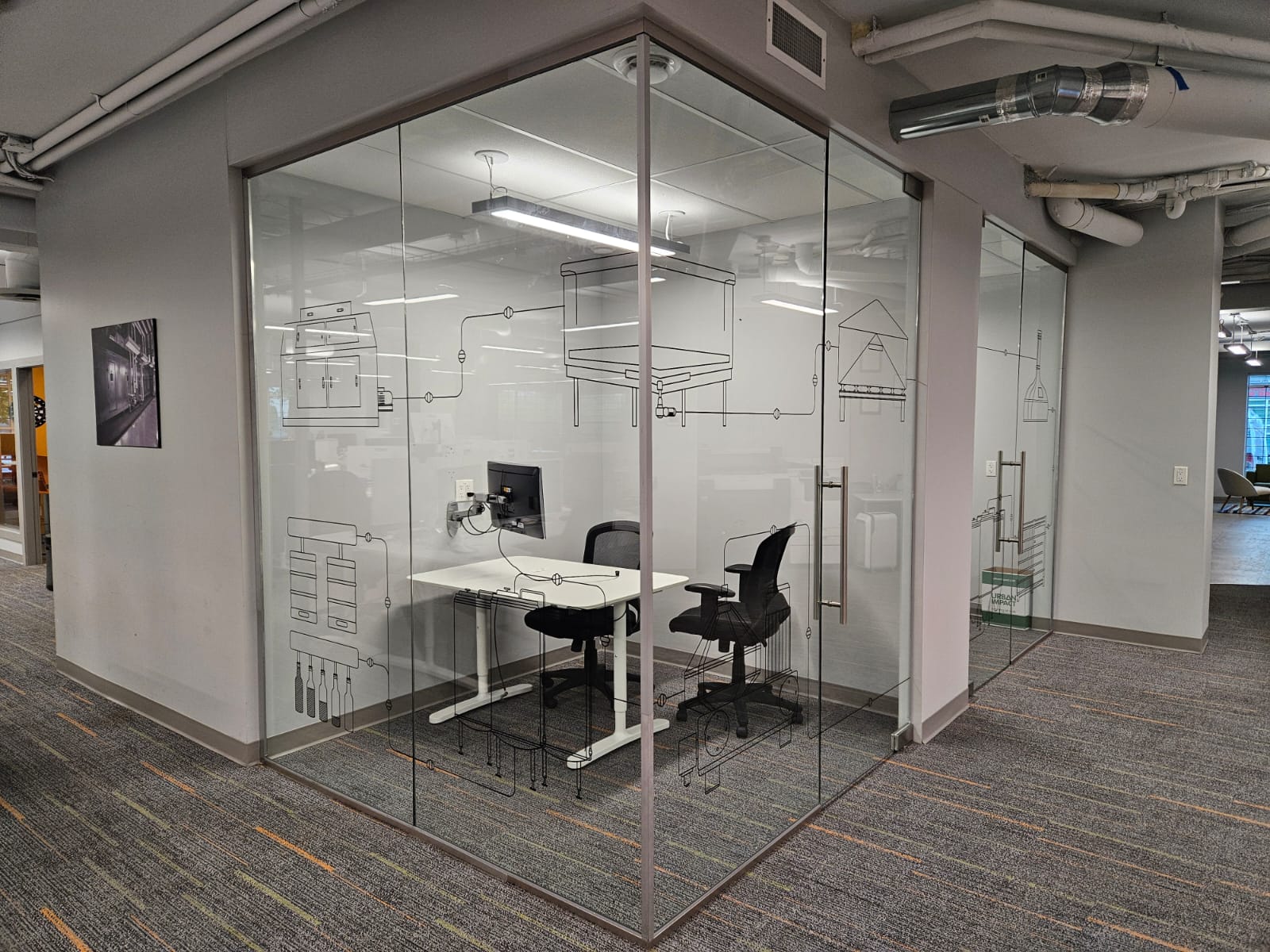
If you are a Facility Manager in Burnaby or an HR Director in a Gastown tech firm, your primary pain point in 2026 isn’t “finding a sign company.”
Your problem is a high-stakes combination of Employee Retention, Space Underutilization, and Asset Devaluation. When a space feels sterile, loud, or disconnected, employees choose the comfort of home. When an office looks dated compared to the new “Showroom-style” developments in Oakridge or The Post, tenants move. Our turnkey environmental packages are engineered to solve these exact business risks.
1. The Hybrid Work Crisis: Making the Office “Better Than Home”
The “Return to Office” mandate failed where the environment failed. In 2026, the office must offer a sensory experience that a home office cannot replicate. Research consistently shows that Biophilic Design (integrating natural elements) and high-quality Acoustics are the top predictors of workplace satisfaction.
The Biophilic Advantage: We don’t just “put up a picture of a forest.” We use textured architectural films and high-definition wall-coverings to introduce organic patterns—wood grains, stone textures, and botanical motifs—that are proven to reduce cortisol levels (stress) by up to 15%.
The Lighting Factor: Vancouver’s dark winters create a “seasonal slump” in productivity. We design graphics that utilize VLT (Visible Light Transmission) principles, ensuring that glass frosting provides privacy without killing the natural light that is so precious in BC.
2. The Turnkey Solution: Architectural Films vs. “Permit Purgatory”
Traditional renovations in Metro Vancouver are currently a nightmare of 6-month permit delays, skyrocketing labor costs, and messy demolition. This is where the Turnkey Architectural Film model changes the math for a CFO.
Sustainability & ROI: Instead of sending a laminate reception desk or 20 doors to a Vancouver landfill, we resurface them with 3M™ DI-NOC™ or similar high-performance films.
The Speed of Branding: We can turn a cold, clinical lobby into a warm, white-oak sanctuary in 72 hours. While a traditional contractor is still waiting for a “Notice of Project,” we have already finished the install.
This isn’t just for offices. We are solving problems for Hospitality Managers (renovating hotel elevators overnight) and Healthcare Administrators (using antimicrobial films in high-traffic clinics).
III. The Economic Reality: ROI of the “Turnkey” Model
The Total Addressable Market for architectural coatings and finishes in Canada is projected to exceed $3.2 Billion by 2030.
Why? Because it is the only way to modernize without the “Permit Purgatory” of Vancouver’s municipal offices.
| The Problem | Traditional Reno | Can-Design Turnkey Solution |
| Permit Delays | 3-9 Months for structural changes. | Zero. Most films are cosmetic/surface-level. |
| Material Costs | Real Walnut/Marble: $100+/sq ft. | Architectural Film: A fraction of the cost. |
| Downtime | Office closed for weeks (dust/noise). | Weekend Install. Employees return to a new space Monday. |
| Waste | Massive landfill contribution (demolition). | Sustainable. We resurface existing assets. |
IV. Moving Forward: Your Brand as a Managed Asset

In Metro Vancouver, your space is your most expensive asset. Treating it as a “static” environment is a mistake.
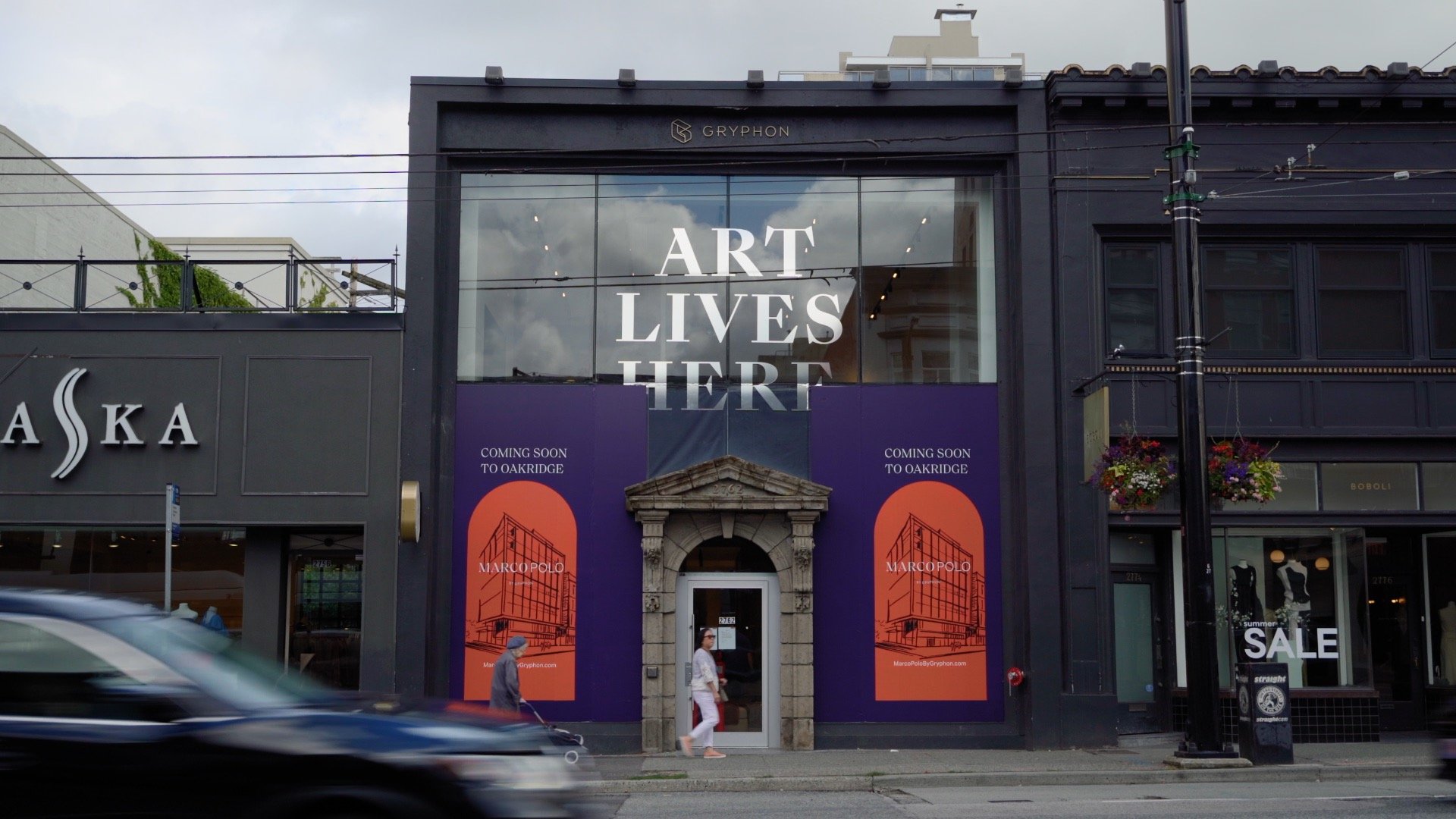
As we’ve discussed in our previous articles on Presentation Centre Excellence, the goal is to create a “Branded Path.” From the moment a client sees your (properly engineered) construction hoarding in the rain, to the moment they touch the (architectural film) grain on your reception desk, the experience must be seamless.
The Can-Design Promise
We don’t just supply the material. We solve the Vancouver Weather Factor, the Employee Retention Problem, and the Construction Budget Crisis through a design-first, turnkey approach.
Stop Managing Signs. Start Engineering Your Environment.
Don’t let the Vancouver climate or a sterile office layout devalue your asset.