


The glass panels on a modern garage door are the primary entry point for solar radiation. While natural light is a design preference, it brings two destructive forces: Ultraviolet (UV) radiation and Infrared (IR) heat.
In the high-density residential areas of The Heights and the industrial corridors of South Burnaby, these forces don’t just fade carpets; they compromise high-value investments.

The glass panels on a garage door are often the most overlooked part of a building’s envelope. Whether you are managing a residential property or a commercial site near Marine Way, these windows are primary points for heat gain and unwanted visibility.
Applying professional-grade window film provides a technical solution to privacy and energy loss without requiring a full door replacement.
Chapter 1: The Physics of UV Damage — Beyond the Fade
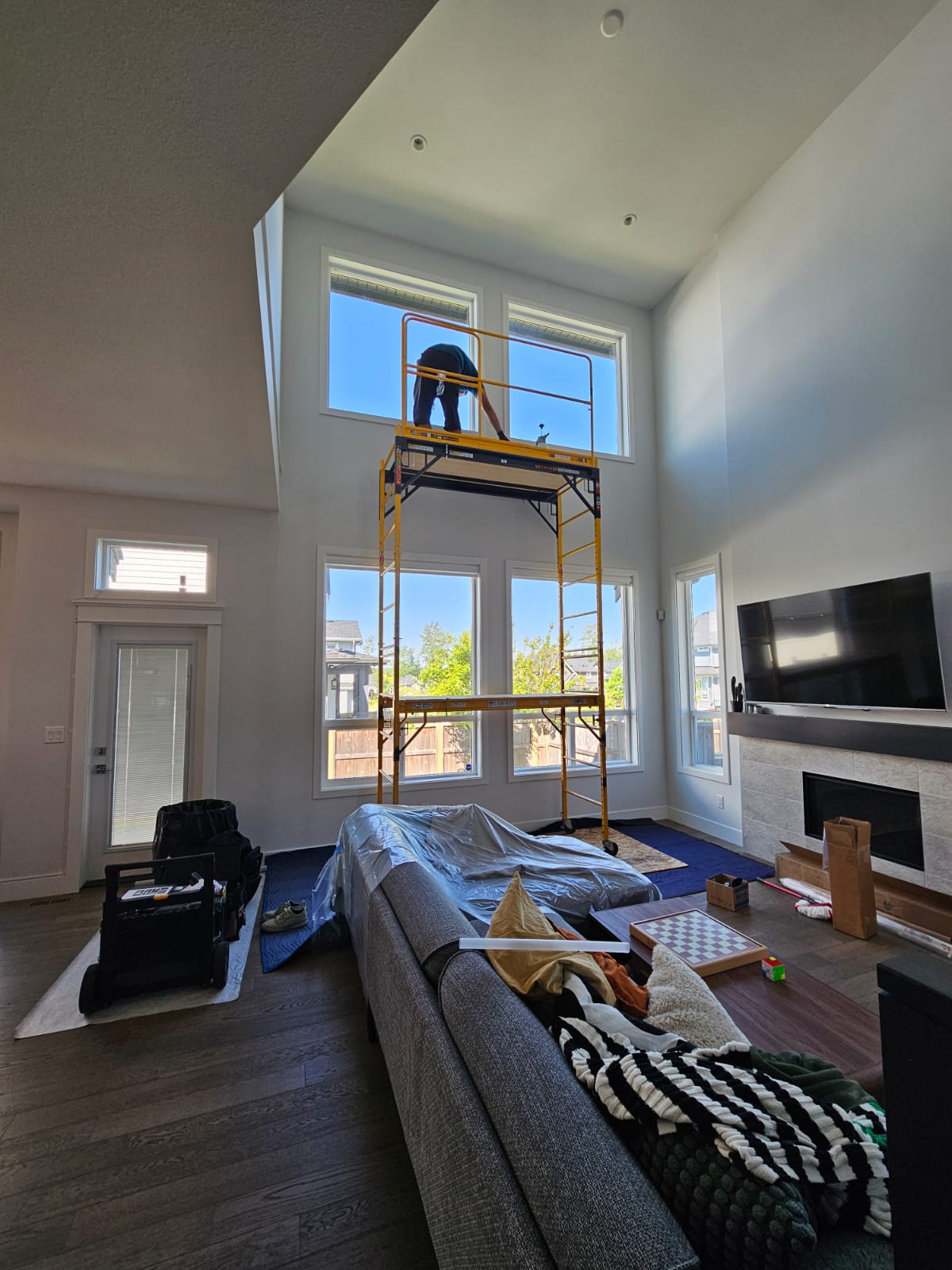
Most people associate UV rays with faded upholstery, but the damage in a garage environment is often structural.
UV radiation accounts for roughly 40% of the fading process, but its impact on synthetic materials is more severe.
1.1 Photo-Degradation of Rubber and Polymers
A garage often houses vehicles, power tools, and seasonal equipment—all of which rely on rubber seals and plastic housings. Constant UV exposure causes the essential oils in tire rubber to evaporate, leading to sidewall cracking or dry rot which compromises safety and requires premature replacement.
Furthermore, the rubber weatherstripping on the garage door itself, and the seals on the vehicles inside, become brittle when baked under UV-amplified glass.
Our architectural films block 99% of these rays, extending the life of these rubber components.
1.2 Protecting the “Tech-Heavy” Garage

With the shift toward Electric Vehicles (EVs) and smart-home integration, the garage is now a high-tech environment. EV chargers and battery storage units are sensitive to ambient heat and direct light.
UV exposure can degrade the plastic casings of high-end tools and charging hardware, leading to yellowing and brittleness that eventually causes mechanical failure.
Blocking these rays serves as a preventative maintenance step for your home’s infrastructure.
Chapter 2: Thermal Stress and Substrate Compatibility
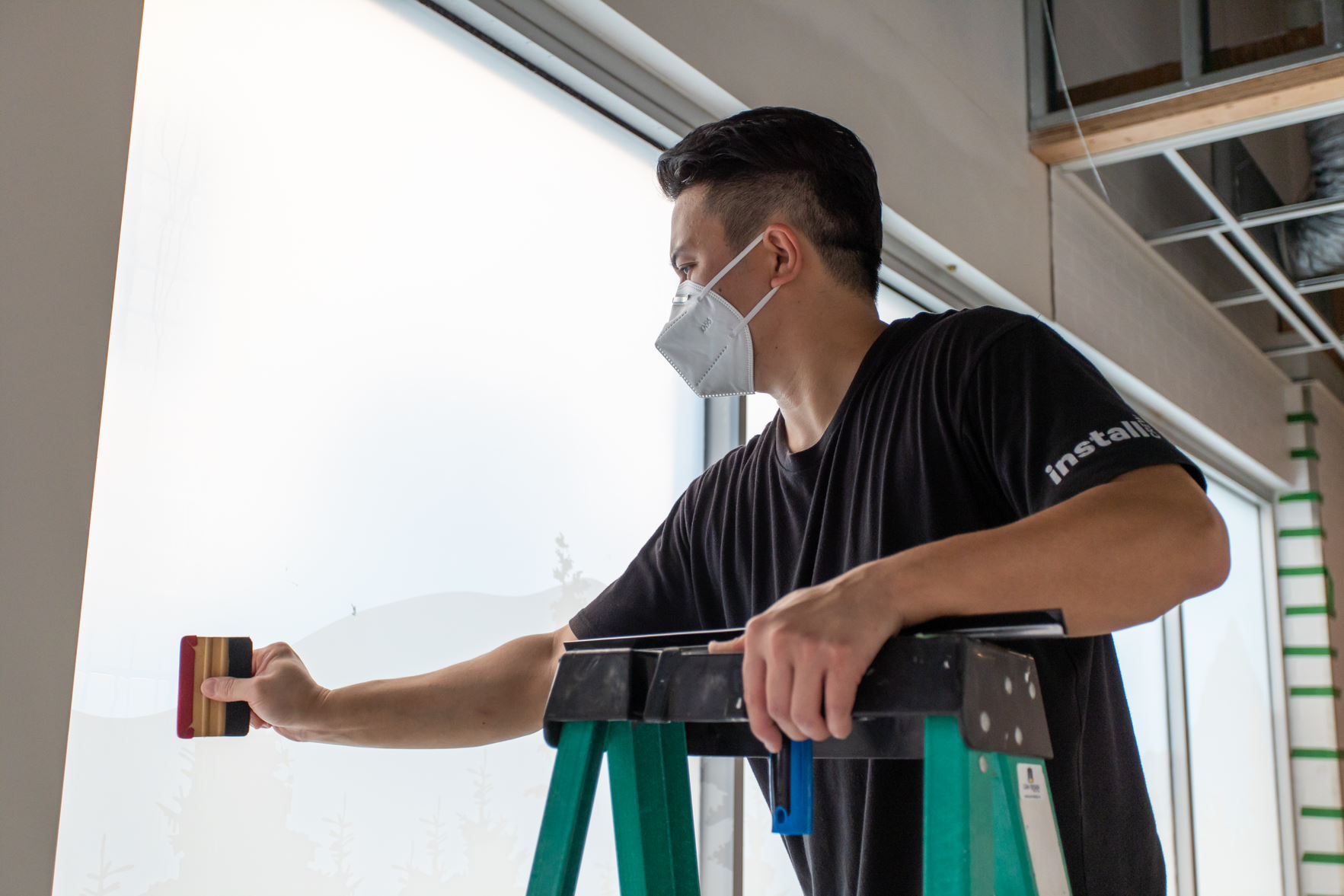
This is where our design experts share their expertise. You cannot simply apply any film to any glass without understanding the thermal mechanics involved.
2.1 Managing the “Thermal Load”
When you tint a garage window, the glass begins to absorb heat rather than just letting it pass through.
If the wrong film is applied to a specific type of glass, such as double-pane or tempered glass, the temperature difference between the center of the pane and the edge can cause a thermal fracture.
2.2 Technical Risk Mitigation: The Substrate Audit
Applying window film is a chemical and thermal modification of the glass. If a high-absorption film is applied to a glass unit without proper calibration, the glass can actually crack from the inside out.
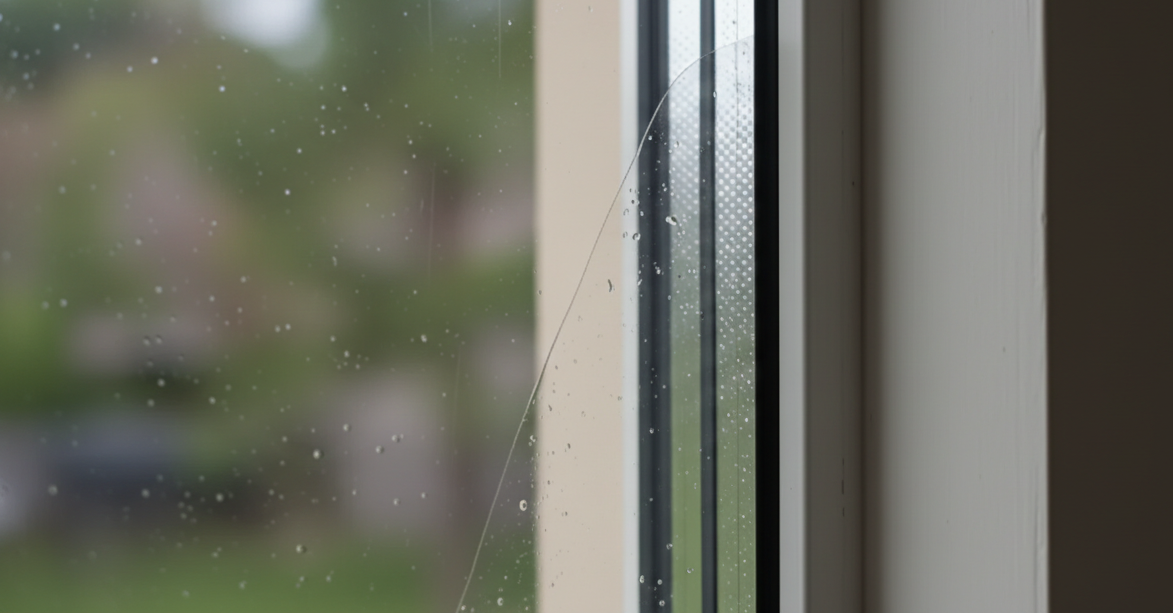
This is why we perform a comprehensive substrate audit before any installation.
We identify whether your garage glass is annealed, tempered, or laminated, then select a film with a Solar Heat Absorption rating specifically compatible with that substrate.
This preventative step ensures the glass remains structurally stable under the B.C. sun, protecting you from the cost of an avoidable glass replacement.
2.3 When is the Strategic Time to Install?
While window film can be applied at any point in a building’s lifecycle, there are specific “high-ROI” windows where installation offers the most significant preventative value.
Recognizing these milestones allows property owners to mitigate risks before UV damage or thermal stress becomes irreversible.
The Post-Renovation or New Build Phase
The most effective time to install window film is immediately following a new garage door installation or a home renovation.
Modern high-end garage doors often feature large glass spans to maximize “curb appeal,” but these are also the most vulnerable to heat gain.
By integrating architectural film into the move-in or post-construction phase, you protect new interior finishes and flooring from Day 1, ensuring that the B.C. sun doesn’t begin the degradation process before the space is even fully utilized.
Seasonal Shifts: Preparing for the Summer Peak
In the Lower Mainland, the “perfect” environmental window for installation is during the spring.
Getting ahead of the first major heatwave in May or June ensures your garage remains a stabilized thermal environment before the glass is subjected to peak solar loads.
Installing during these transitional months allows the film to “cure” in moderate temperatures, providing a seamless bond that is ready to reject maximum infrared heat by the time July temperatures arrive.
Following a Security or Privacy Audit
If you have recently upgraded your home security system or purchased high-value assets—such as a new EV or specialized workshop tools—that is the immediate signal to address your glass.
If your security audit reveals that your garage contents are visible from the street, window film is the fastest, most cost-effective way to “close” that vulnerability without a major structural renovation.
It turns a transparent liability into a private, secure vault.
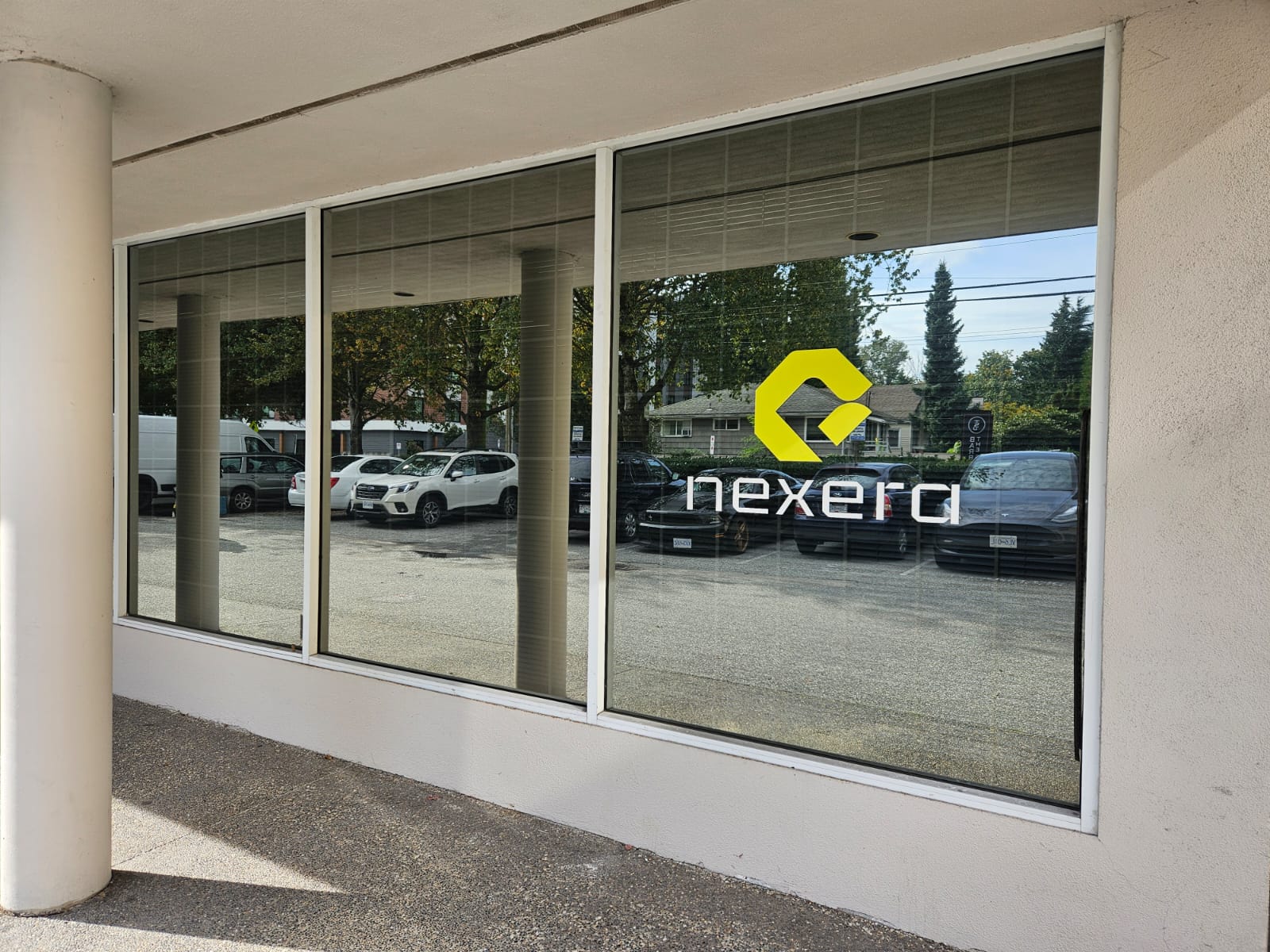
Chapter 3: Privacy as a Security Layer
Visual access is the first step in a targeted theft. A garage with clear glass allows for inventory mapping from the street.
3.1 Eliminating “Window Shopping”
In areas like Metrotown or Brentwood, street-level visibility is high.
Clear glass allows passersby to see exactly what is in the garage—and exactly when it is missing.
Beyond security, tinting hides the internal clutter of a working garage and creates a uniform, clean look that matches the building’s architectural finish.
Much like our approach to Campus Wayfinding at UBC, we help you choose between reflective films for maximum privacy or neutral charcoal tints that provide a modern, low-profile look without a shiny finish.
Chapter 4: The Economic Case for Burnaby Property Owners
Upgrading your garage door windows with professional tinting is a strategic investment in the long-term efficiency of your building’s envelope.
4.1 Reducing the “Heat Sink” Effect in South Burnaby
Many homes and commercial bays in South Burnaby face significant southern exposure. During the summer months, a standard metal or glass garage door acts as a massive radiator.
If your garage is attached to your home, that heat transfers through the shared wall, forcing your cooling system to work 15–20% harder.
4.2 Energy Audit Savings
Reducing the ambient temperature of the garage by even 5–8 degrees can significantly lower monthly utility costs for both residential and commercial clients.
This financial efficiency is a core part of our Burnaby Development Blueprint, ensuring your property runs as efficiently as possible.

Chapter 5: Impact Resistance and Security
In high-density urban centers, security is a non-negotiable requirement. While many security measures are reactive, our architectural films function as a critical preventative layer within a building’s security stack.
5.1 Shatter-Shield as a Local Deterrent
A smash-and-grab only works if the intruder can enter and exit in seconds.
Our security films are engineered to hold glass shards together upon impact, meaning that even if the glass is shattered, the film remains a physical barrier.
Forcing entry through a filmed window is loud and time-consuming.
In neighborhoods like Edmonds or Brentwood, that extra 30 seconds of resistance is often enough to deter an intruder entirely.
5.2 The Psychology of Prevention
Beyond the physical barrier, window film serves as a psychological deterrent. By reducing interior visibility, you remove the “visual reward” for potential intruders.
If a criminal cannot confirm the presence of high-value assets like luxury vehicles or specialized tools, the risk of a “blind” break-in usually outweighs the potential reward.
This preventative strategy shifts the focus from stopping a crime in progress to ensuring the site is never targeted.

5.3 Reducing Post-Incident Liability Prevention also extends to the aftermath of an attempted breach or accidental impact. In a commercial or residential garage, flying glass is a major liability.
Security film keeps the substrate contained within the frame, preventing injury to occupants and protecting interior assets from glass shards.
This protective layer is a standard recommendation in our Architectural Film Solutions services.
Chapter 6: The One-Stop-Shop Workflow
The value of a One-Stop-Shop isn’t just convenience; it’s the elimination of the friction between vendors.
6.1 From Audit to Installation
When we take on a project near Cariboo Road, we own every stage of the process. We begin with a site audit to measure UV levels and check glass compatibility, followed by strategic design where we provide a rendering of how the tint will alter the building’s exterior.

Our specialized in-house teams handle the application to ensure no dust or “fingering” at the edges. Because we are minutes away, we provide real-time support for our local clients, a level of accountability we maintain across all projects, including the Tour de Concord Burnaby.
Chapter 7: Navigating the Burnaby Strata and Bylaw Landscape
For property owners in high-density areas, a garage is often subject to specific municipal or Strata aesthetic guidelines. Navigating these rules is where our consulting expertise provides the most value.
7.1 Compliance with Strata Visual Standards
Most Strata bylaws in Burnaby include clauses regarding uniformity of exterior appearance.
We assist clients by providing material samples and technical specs that they can present to their Strata council.
If your Strata requires a neutral look, we utilize non-reflective films that offer the same UV and heat rejection benefits without altering the external color of the glass.
This consultative approach is detailed further in our Burnaby Signage Bylaw Guide.
Chapter 8: Maintenance and Longevity in the B.C. Climate
The B.C. coast presents a specific set of challenges. Between the high humidity, seasonal pollen, and the heavy road salt used on Burnaby’s hills during winter, your window film requires a specific care regimen.
8.1 The “Post-Install” Cure Phase B.C.’s moisture levels can impact drying time, so we advise clients to avoid cleaning the windows for at least 30 days post-installation to prevent haze or bubbles.
8.2 Cleaning for Longevity Standard glass cleaners often contain ammonia, which can degrade the scratch-resistant coating.
We recommend a solution of water and a few drops of dish soap with a microfiber cloth.
Because of the heavy tree canopy in many Burnaby neighborhoods, sap and pollen can accumulate, and we provide a maintenance guide on how to safely remove these without scratching the film substrate.
Conclusion: A High-IQ Investment for Burnaby Property Owners
Applying window film to your garage door is a technical solution to environmental and security problems.
By filtering out 99% of UV rays and providing shatter-resistance, you change the performance of your building’s envelope.
When you work with a One-Stop-Shop like Can-Design, you aren’t just getting an install. You are getting a Burnaby-based partner who manages the design, understands the local bylaws, and provides the long-term support needed to protect your most valuable assets.
Protect your assets from the top down.
Don’t wait for your tires to crack or your upholstery to fade.
Contact our Burnaby team for a comprehensive UV and thermal audit of your garage.
Let’s build a barrier that keeps your garage private and your investments protected.