


Executive Summary
- [Primary Financial & Operational Risk]: Installing unpermitted or non-compliant commercial signage across Metro Vancouver can result in municipal fines up to $10,000, forced sign removal at the owner’s expense, stop-work orders, and immediate lease default.
- [Municipal & Regulatory Complexity]: Each Lower Mainland city enforces distinct legal frameworks, from Vancouver’s 25% window coverage cap to Richmond’s 50% English language requirement and Surrey’s ban on electronic message boards.
- [Project Timeline Protection]: A structured, four-week pre-lease site survey and engineering verification process prevents costly launch delays and ensures full compliance with Technical Safety BC and local building codes.
The Permitting Bottleneck: Protecting Your Commercial Real Estate Asset
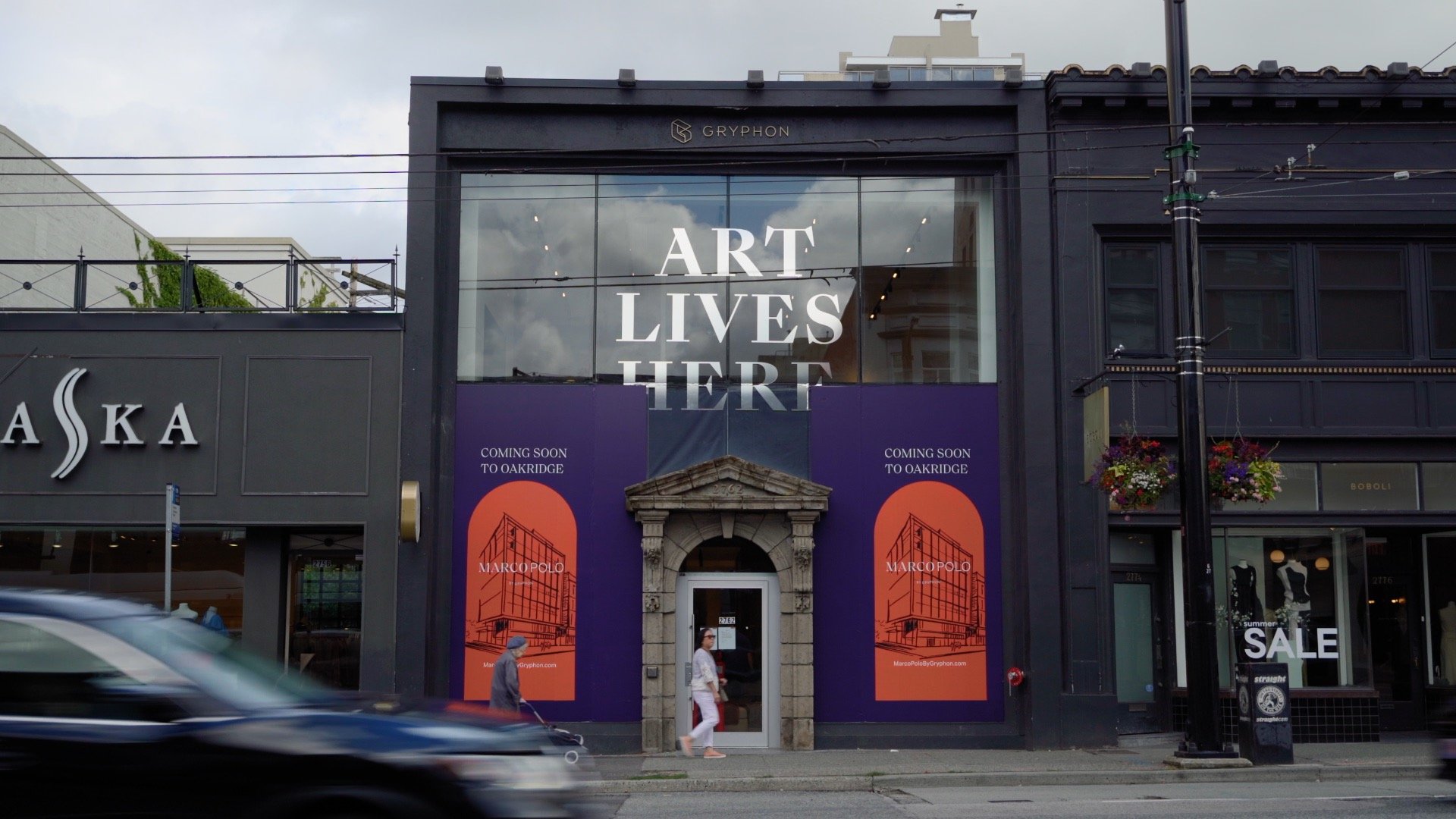
Signing a commercial lease on premier retail corridors like Robson Street, West Broadway, or the Kingsway corridor is a major milestone for any expanding business. However, physical signage permitting is consistently the single biggest unforeseen bottleneck threatening grand opening timelines across Metro Vancouver.
Unpermitted or non-compliant storefront graphics trigger severe consequences, including forced removals, municipal fines up to $10,000, and commercial lease default.
Treating exterior branding as a last-minute installation task routinely traps property managers, franchisees, and retail operators in multi-month municipal backlogs.
Proper permitting and spatial planning must be approached as vital asset protection rather than administrative red tape. Aligning your visual identity strategy with local bylaws early safeguards launch capital, protects tenancy agreements, and guarantees opening day readiness.
The Metro Vancouver Bylaw Patchwork: A City-by-City Breakdown
Navigating Metro Vancouver requires understanding that crossing municipal boundaries changes your legal operating framework. A signage package approved along Highway 1 in Burnaby will face immediate rejection under downtown Vancouver regulations. Every commercial footprint must adhere to specific municipal standards and technical mandates.
- City of Vancouver (Sign By-law No. 11879 / Former No. 6510): Enforces strict limits based on linear street frontage calculations, capping window graphic coverage at 25% per pane and mandating specialized reviews for historic zones like Gastown and Yaletown.
- City of Burnaby (Sign Bylaw No. 14834 / Consolidated Bylaw No. 6163): Regulates commercial centers like Metrotown, Brentwood, and Big Bend, enforcing a strict 9-foot vertical clearance for projecting signs and charging double permit application fees for unpermitted installations.
- City of Richmond (Sign Bylaw No. 9700): Requires individual permit applications for every distinct sign face along high-density strips like No. 3 Road, while strictly enforcing a mandatory minimum of 50% English text on all multilingual signage.
- City of Surrey (Sign By-law Regulations): Enforces rigid commercial zone restrictions across fast-growing hubs, explicitly prohibiting roof signs, billboards, inflatables, and electronic message boards citywide.
- Technical & Electrical Standards (Technical Safety BC / BC Electrical Code): Requires all illuminated channel letters, backlit cabinets, and halo-lit displays to maintain certified electrical listing marks and structural engineering approvals prior to final municipal building inspection sign-off.
Not sure if your storefront graphics align with your building’s Comprehensive Sign Plan or local bylaws? Reach out to our local Burnaby studio for a rapid spatial compliance check.
Navigating Landlord Approvals & Comprehensive Sign Plans (CSPs)

Securing a municipal permit is impossible without prior written authorization from your property manager or landlord. Multi-tenant retail plazas, shopping centers, and commercial office towers operate under a Comprehensive Sign Plan (CSP) or Master Sign Plan (MSP).
These legal property schedules dictate exact letter heights, illumination color temperatures, mounting depths, and permitted substrate materials.
Submitting non-compliant visual concepts that violate your plaza’s CSP results in immediate landlord rejection and wasted engineering fees.
Commercial lease agreements typically classify unauthorized building envelope penetrations as structural defaults.
Reviewing Schedule C of your lease alongside a commercial signage specialist ensures your visual assets meet both landlord criteria and municipal bylaws before production begins.
The 4-Week “Permit-Ready” Checklist: Chronological Implementation
- Step 1: Site Survey & Property Line Verification: Conduct a metric-accurate physical site check to measure wall frontage, window mullions, overhangs, and property line setbacks to establish precise legal design boundaries.
- Step 2: Vector Engineering & Technical Review: Prepare vector artwork files scaled to real-world architectural proportions, securing certified BC structural engineering Schedule B stamps and Technical Safety BC electrical compliance for all illuminated assets.
- Step 3: Application Assembly & Documentation: Compile complete submission packages containing land title certificates, owner Letters of Authorization, active municipal business licenses, scaled building elevations, and full material callouts.
- Step 4: Submission & Lead-Time Buffer: Submit digital applications through municipal portals (such as Burnaby’s My Permits Portal) 4 to 6 weeks prior to your targeted grand opening to accommodate plan-checker review cycles and fabrication timelines.
High-Risk Pitfalls to Avoid
- Over-Covering Window Glass: Exceeding the 25% window pane coverage limit under City of Vancouver Sign By-law No. 11879 reclassifies graphics as major architectural modifications, triggering lengthy development reviews and blocking interior natural light transmission.
- Illegal Sidewalk A-Frames: Placing portable sandwich boards on public sidewalks or boulevards violates municipal rights-of-way laws in Vancouver, Burnaby, and Surrey, resulting in immediate confiscation by bylaw officers and steep recovery fees.
- Unpermitted Heritage Modifications: Drilling into historic brick or modifying building facades in designated heritage districts without a formal Heritage Alteration Permit leads to stop-work orders and costly restoration penalties.
Secure Your Grand Opening: Partner with CAN-DESIGN
Opening a physical location across Metro Vancouver requires balancing high-impact spatial branding with strict municipal oversight. Failing to account for local sign bylaws, landlord criteria, or Technical Safety BC requirements can derail your launch timeline and drain capital through forced revisions.
Partnering with a Burnaby-based manufacturer ensures your visual assets are engineered, permitted, and fabricated correctly the first time.
Avoid opening delays, unapproved sign removals, and costly municipal penalties.