


Executive Summary
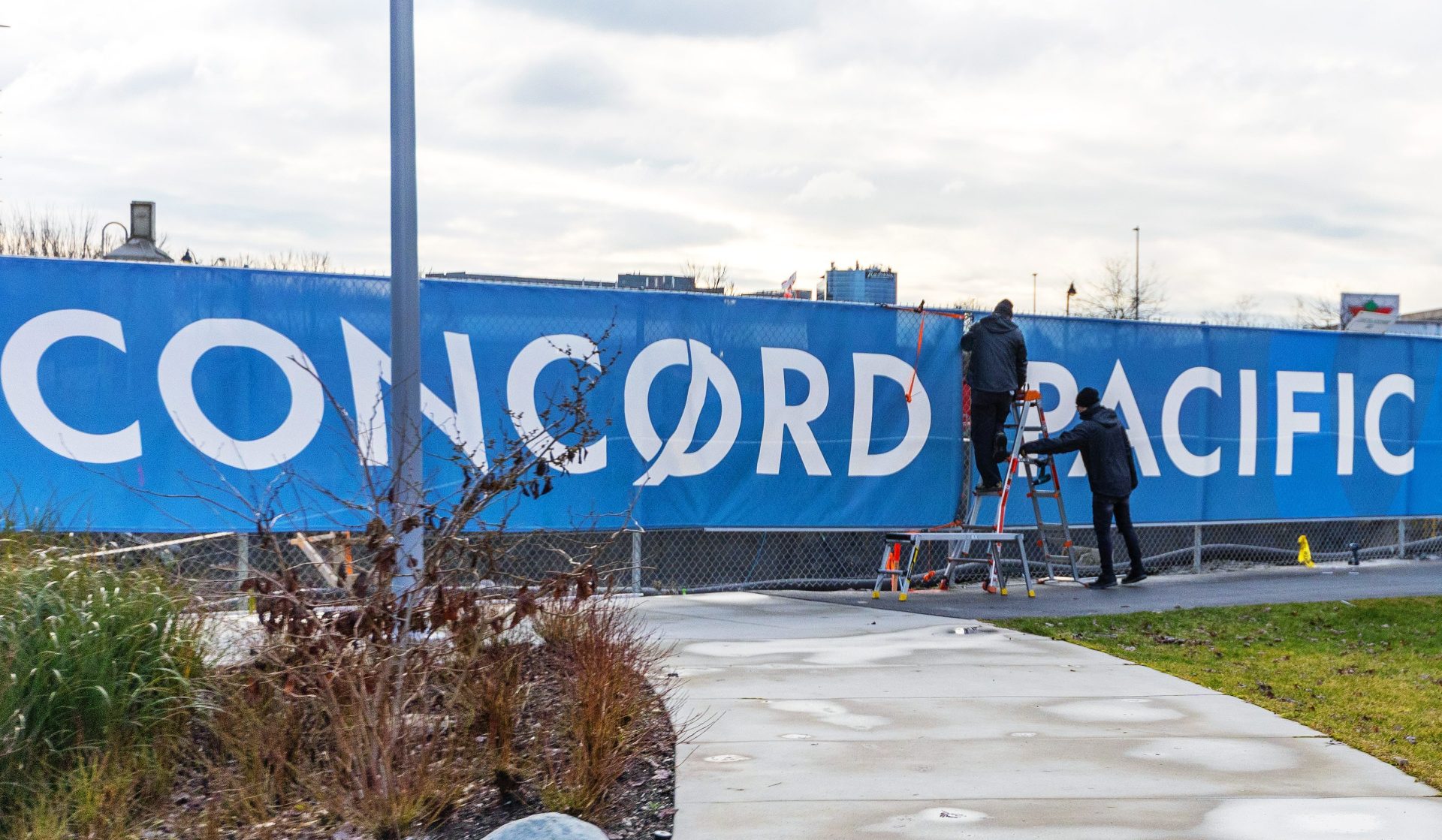
Structural Wind-Load Risk: Hanging solid vinyl banners on exposed perimeter fencing transforms site signage into a massive wind sail, causing torn graphics, collapsed fencing, and costly structural repairs during coastal Pacific Northwest storms.
Micro-Perforated Engineering: Perforated mesh (scrim) banners allow high-velocity winds to pass through the substrate safely while preserving total visual density for street-level brand impact.
Long-Term Asset Protection: Deploying weather-engineered mesh along active construction hoarding protects site safety, maintains 24/7 brand equity, and prevents premature graphic replacement across high-wind corridors.
The Financial & Operational Hazard of Solid Vinyl Fencing

In dense urban development sites across Metrotown, Brentwood, and the Kingsway corridor, high-velocity coastal wind loads exert immense physical tension on temporary perimeter boundaries.
Standard solid PVC vinyl banners hung along high-exposure chain-link fencing act as unyielding wind sails during severe West Coast storms. When severe gales hit an unvented perimeter, the force does not merely tear the vinyl material at the grommets.
The accumulated kinetic load transfers directly into the support fence, risking structural collapse, damaged site equipment, and potential municipal safety fines. For commercial developers and site supervisors, replacing torn hoarding graphics after every autumn storm is an avoidable operational line item that drains project contingency budgets.
Protecting site perimeters requires engineering signage boundaries with local atmospheric physics in mind.
Technical Specifications: The Science of Perforated Mesh Banners
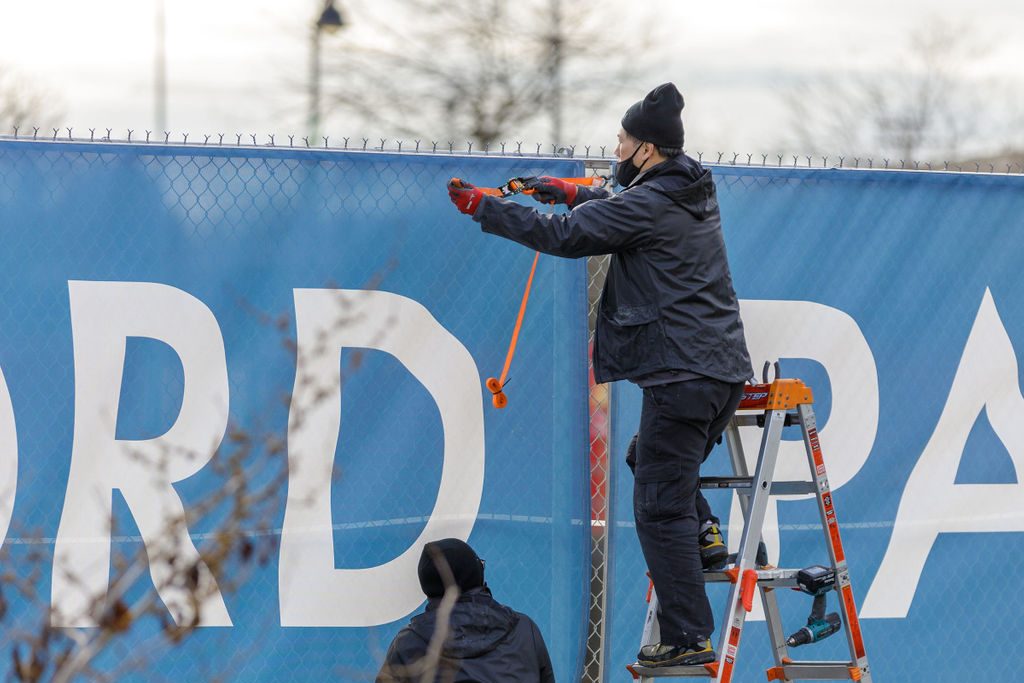
Perforated mesh—or scrim—banner substrates solve the tension equation by introducing engineered air channels directly through the material matrix.
Rather than resisting coastal wind forces, mesh allows atmospheric pressure to bleed off continuously without compromising brand legibility.
- Wind-Load Relief: Micro-perforations reduce surface air resistance by letting high-velocity gales pass through the substrate, eliminating structural tension, sagging, and anchor point failures.
- Optical Density Calibration: At standard viewing distances along busy urban thoroughfares, human optics merge the micro-perforated pattern into a crisp, solid visual image, turning construction barriers into high-impact 24/7 brand assets.
- Substrate & Edge Durability: Engineered from heavy-gauge, UV-stable materials, premium mesh banners resist long-term moisture exposure without trapping standing water or suffering ink degradation along welded hems.
Not sure if your perimeter hoarding graphics meet local municipal wind-load standards and sightline bylaws?
Reach out to our Burnaby studio for a rapid, site-specific spatial audit.
Strategic Workflow: Engineering Perimeter Signage for West Coast Climates
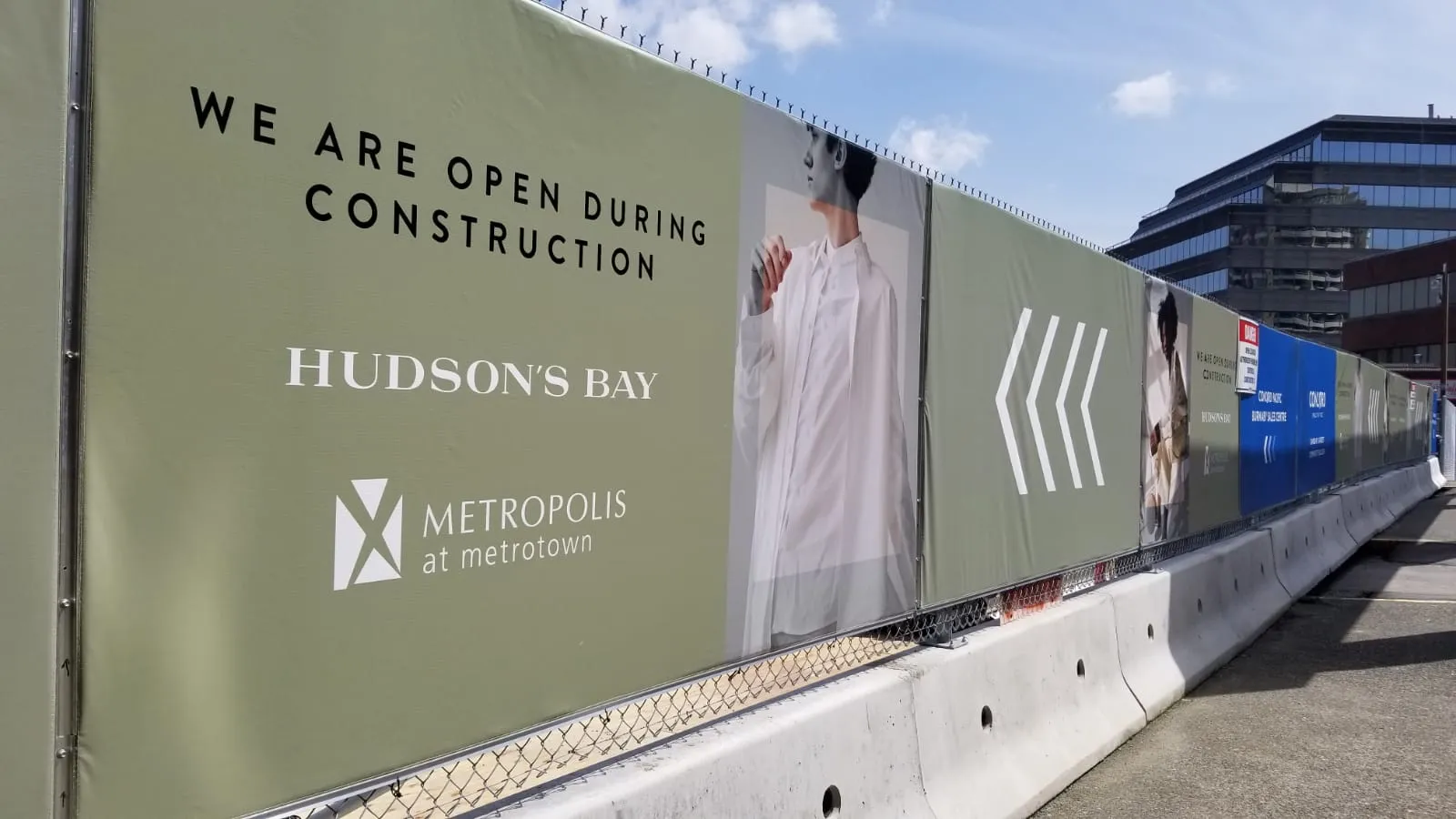
Transitioning from commodity solid vinyl to engineered mesh begins during early site layout planning. Site managers must assess local microclimates, including wind shear vectors along open transit corridors in Big Bend and Fraser Valley construction hubs.
Matching the open-weave percentage of the mesh substrate to site exposure ensures optimal stability without sacrificing graphic resolution for prospective buyers.
Installation protocols are equally vital to long-term performance.
Utilizing industrial-grade, UV-treated edge bindings and reinforced grommet placement prevents localized stress fractures when heavy gusts strike.
By integrating atmospheric calculations into temporary site branding, commercial builders safeguard their perimeter investments from initial site mobilization through to project completion.
Protect Your Site Boundaries with Climate-Engineered Hoarding
Don’t let seasonal windstorms damage your site perimeter, compromise WorkSafeBC compliance, or destroy your project marketing before grand opening day.
Our local Burnaby team manufactures heavy-duty, climate-tested mesh hoarding and fence banners designed specifically to endure Metro Vancouver’s toughest weather profiles.