


British Columbia’s transit infrastructure push is a double-edged sword. While the province’s new Transit-Oriented Development (TOD) legislation promises massive long-term foot traffic around SkyTrain hubs, the multi-year construction phase required to build these spaces can be devastating for local businesses.
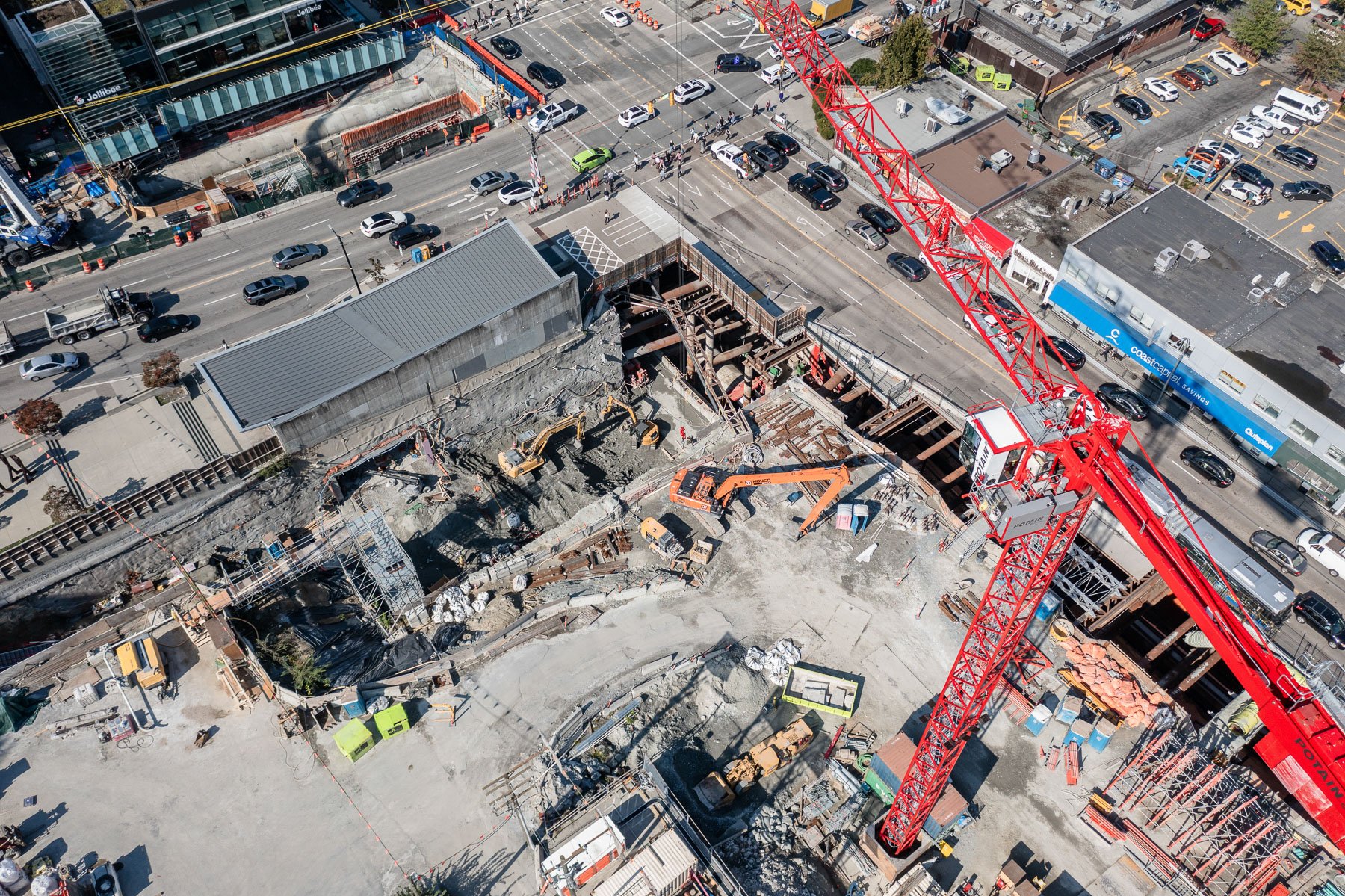
Look no further than the Broadway Subway Project. Originally slated to open sooner, construction delays have pushed the completion date out to fall 2027. The economic fallout for local storefronts has been severe.
When the province completely shut down East Broadway between Main and Quebec streets for four months to dismantle a temporary construction bridge, business owners along that corridor hit a breaking point.
According to data from the Mount Pleasant Business Improvement Association (MPBIA), the number of active business licenses in that small five-block stretch plummeted from over 125 down to fewer than 60. Iconic local staples like Fable Diner reported guest count drops of over 45% due to the disruptive environment.
The province has held a strict line against financial compensation or lifeline grants for impacted merchants. This leaves business owners with only one option: protecting their own foot traffic through aggressive, tactical navigation design.
The Broadway construction crisis highlights a massive gap in how cities manage major infrastructure projects—and offers critical lessons on how businesses must adapt their physical branding to survive.
1. Where Construction Wayfinding Breaks Down: The Visibility Crisis
When a major transit project takes over a commercial corridor, the provincial government and municipal teams focus almost entirely on vehicle detours and safety fencing. Pedestrian access and storefront visibility are routinely treated as last-minute checkboxes, creating significant barriers between local shops and their customers.
- The Fencing Blindspot: High security fences and heavy equipment create an accidental wall between the sidewalk and the street. Pedestrians walking on the opposite side of the road cannot see your signage, making your business functionally invisible to half the street.
- The “Closed Block” Illusion: When roads are closed to cars and buses are rerouted down side streets, the general public subconsciously assumes the entire block is a dead zone. If there isn’t clear, proactive signage at the intersection entry points, shoppers won’t even step onto the sidewalk.
- The Parking Disconnect: The removal of street parking and loading zones forces customers to hunt for space in complex back alleys or underground parkades. If your rear-entrance or alleyway wayfinding is non-existent, customers give up and go elsewhere.

2. The Canva Scale Trap: Why Screen Design Fails in the Physical World
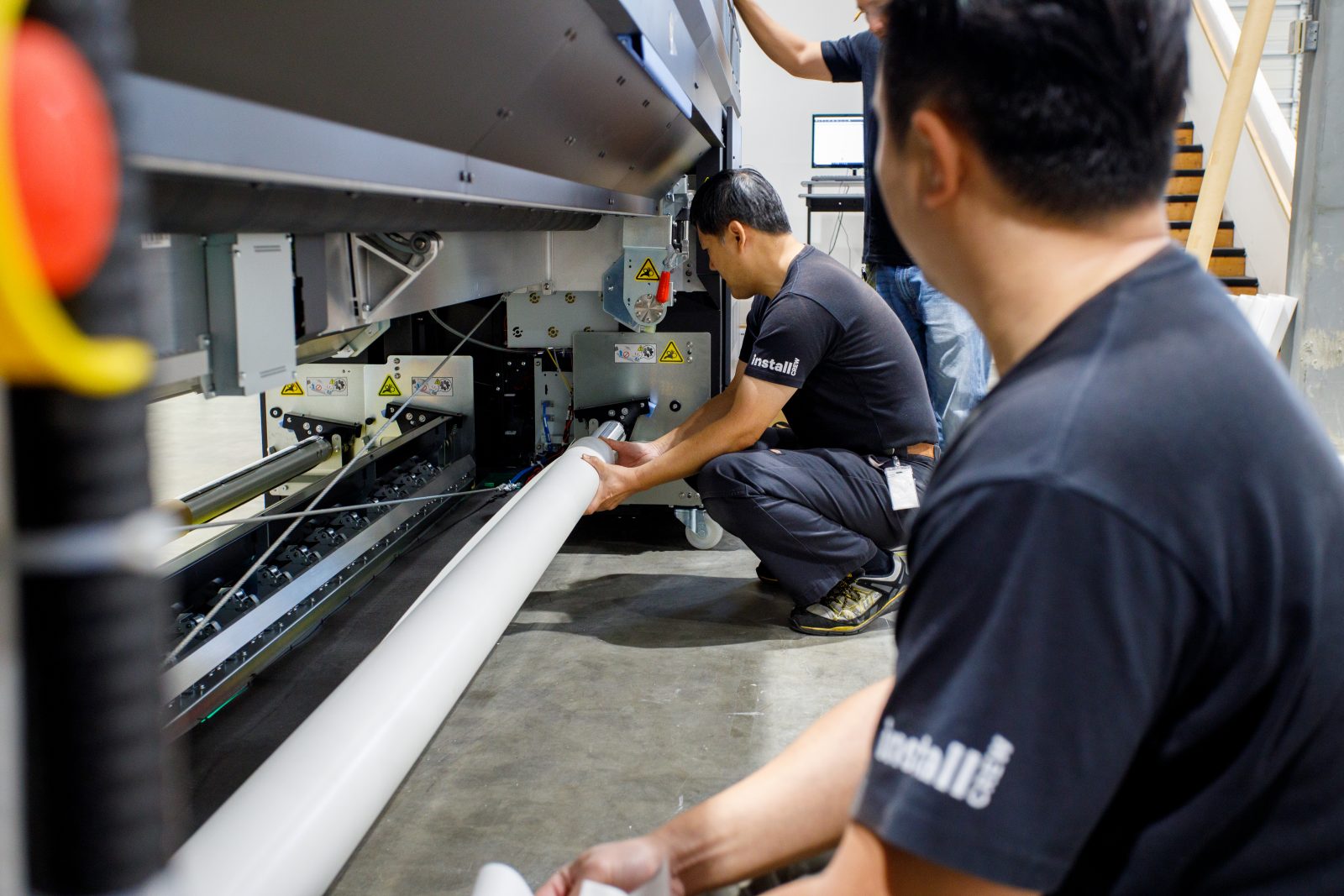
With the accessibility of web-based design tools, it has never been easier for an in-house marketing team to mock up a stunning visual concept on a laptop. The pain point occurs when that file is handed off to a commercial printer and stretched across a massive storefront wall or retail window. What looks perfect on an in-house mockup doesn’t always translate seamlessly to a large-scale physical space.
| Design Factor | Standard Screen Templates | Large-Format Print Realities |
|---|---|---|
| File Resolution | Optimized for web views or distant viewing setups. | Requires high-resolution vector scaling to remain crisp up close. |
| Color Profiles | Calibrated for RGB screen projections. | Requires CMYK or Pantone calibration to prevent muddy color shifts. |
| Viewing Geometry | Designed for static, close-up digital screens. | Accounts for pedestrian viewing angles, distance physics, and lighting. |
Designing for physical environments involves variables digital screens don’t account for. When a template graphic is blown up to fill a wall without technical pre-flight calibration, layout proportions break, text becomes illegible, and slight file discrepancies turn into highly visible brand liabilities. Ensuring your files are scaled using high-resolution assets is non-negotiable for close-range retail spaces.
3. The Internal Pop-Up: Converting Real Estate into a Corporate Presentation Centre
Enterprise brands are recognizing that high-velocity pop-up principles shouldn’t be confined to retail streets. High-growth B2B firms across the Lower Mainland are using these identical, damage-free visual layers internally—transforming plain corporate offices into high-prestige corporate presentation centres to win major contract bids and close institutional investors.
- Hurdle: The Standard Drywall and Glass Box — Your current boardroom lacks spatial narrative and offers zero visual privacy for sensitive corporate data displayed on screens during a pitch.
The Fix: We completely re-skin your interior walls with architectural-grade wraps and integrate custom-designed frosted or dusted crystal window films onto the glass partitions. The space shifts into a secure, prestige-coded presentation hub over a single weekend with no construction dust. - Hurdle: Zero Brand Immersion for High-Value VVIPs — A major stakeholder walks into your space, but the surrounding architecture completely fails to communicate your market authority, case studies, or operational scale.
The Fix: We introduce a coordinated system of dimensional acrylic lettering, halo-lit logo anchors, and floor-to-ceiling visual timelines that guide guests seamlessly from the elevator lobby directly into your main presentation room. Your office becomes an active sales tool.

Stop Ordering Signs. Start Deploying Systems.
Whether you are trying to navigate complex municipal sign by-laws, correcting design file errors before they ruin a print run, or converting an existing office layout into a high-end presentation environment, CAN-DESIGN is your local execution authority. Everything we produce is fabricated directly within our local Burnaby facility, ensuring total control from the initial vector file to the final on-site installation.
Take Action on Your Next Project:
Ready to transform your space without the construction friction or permitting delays? Let us resolve your file errors, navigate municipal hurdles, and launch your footprint on schedule.
[Book a Wayfinding and Corporate Presentation Centre Consultation with CAN-DESIGN Today]