


Using a faux wood finish makes it possible to achieve an attractive wood grain aesthetic without the often prohibitive cost of using the real thing. The wood look is very popular for both interior and exterior design of residential and commercial spaces due to the warmth and timeless visual appeal it adds to any space.
Whether for cabinets, accent walls, columns, elevators, or decking, a wood grain look fits seamlessly into various design themes. Luckily, you don’t have to break the bank to achieve this look. Faux wood finishes make it possible to replicate expensive hardwoods such as walnut, teak, or mahogany. In fact, you can mimic virtually any type of wood you desire with the right architectural finishes.
Affordable Wood Alternatives
How do you make something look like it is made from wood? Before diving into the advantages of using decorative film to achieve a faux wood finish, let’s take a look at the variety of other affordable ways to mimic wood.
“Faux wood finish” can refer to any material that replicates the look and texture of natural wood, including paint, veneers, vinyl wrap, and more. Depending on your needs and budget, you have plenty of options to add a wood look to your space. Here are just a few of the most common ways to mimic wood.
Faux Wood Laminates, Composites, and Veneers
Laminates are relatively thin, durable sheets printed with woodgrain designs on the surface and bonded to a composite base. These are often used for cabinets, countertops, and furniture. Composites can be made from a combination of wood and plastic and are coated with a woodgrain finish before being used on decks, fencing, and outdoor furniture. In contrast, wood veneers are very thin slices of real wood fixed to the surface of another material to mimic solid wood at a lower cost.
Faux Wood Paint Finishes
Special painting techniques can mimic the appearance and texture of wood. Achieving a realistic look will likely require multiple layers of paint, special woodgrain tools, and perhaps some trial and error to get your desired look. You may opt for a DIY kit to try this yourself if it’s a low-stakes refurbishment of some furniture or doors or hire a professional with experience mimicking wood.
Wood-Look Tiles
Porcelain or ceramic tiles can be printed with designs that replicate the appearance of wood but have the functionality and durability of tiles. Using tiles to mimic wood is a good option for flooring in high-traffic areas. Their water resistance also makes wood-look tiles ideal for bathrooms, laundry rooms, and other wet areas.
Vinyl Wraps and Decorative Films to Mimic Wood
Vinyl wraps are flexible self-adhesive films printed with woodgrain patterns. They are relatively easy to use, making them an affordable option for DIY refurbishment projects such as changing the look of furniture, wall panels, and vehicles.
A similar option that is also applied to existing surfaces with adhesive backing is premium architectural films. These versatile films are slightly thicker and more durable than vinyl wraps and come in a much larger variety of natural material finishes, including any wood grain you can think of.
Why Use Decorative Films for a Faux Wood Finish?
There are several advantages of using faux wood to enhance any space, whether it is an office, a retail space, a residential building, a healthcare facility, or another type of building.
Cost Savings
The most obvious advantage of using a faux wood finish is that it is much more cost-effective than using real wood, especially if you are trying to cover a large area. Depending on your location, the type of wood you wish to incorporate into your design may not be available. Even if it is available, it may be out of your budget.
This is especially true if the look you’re going for involves a particularly pricey type of wood, such as rosewood, sandalwood, cherry, or ebony. Faux wood finish makes it possible to achieve any wood look you can imagine at a significantly lower cost.
In addition to cost savings on the wood itself, using a decorative film to achieve a faux wood finish also means a much lower time and installation cost. Decorative film can be easily applied on any surface, including walls, cabinets, and even furniture, minimizing disruption to employees or residents because there is less noise. Not needing to hire a carpenter to achieve the aesthetic you seek will certainly yield some cost savings that you can put toward other needs!
Aesthetic Appeal
Faux wood finishes come in a huge range of colours and grains, making it possible to create any high-end wood look you can imagine. Mimicking wood also has the added benefit of ensuring a smooth, uniform appearance without the knots, cracks, and other imperfections that may be present in the real thing.
Durability
Unlike real wood, faux wood finishes will not warp in response to moisture. Faux wood is safe from pests such as termites and will not get mouldy, both of which may be a concern in hot, humid environments. The resistance to moisture and disinfectants makes surfaces easy to clean, and you can rest assured that wood-look architectural film will last longer than many traditional interior surface materials.
Psychological Benefits
Faux wood finishes enable us to create welcoming interior and exterior spaces that evoke a feeling of being close to nature. A growing body of research suggests that there are psychological benefits to incorporating natural elements such as wood into office spaces and homes, including reduced stress. This work is focused on the concept of biophilia, the idea that people have an inherent need to be connected with nature for their well-being.
Using faux wood finish allows you to create welcoming work, shopping, and residential environments that evoke this sense of closeness to nature. Just as “living walls” composed of plants and water features enhance interior spaces, so too can strategically incorporated wood. “Wood” beams, feature walls, panels, and cabinets all help to build a welcoming and stylish space.
Versatility
Faux wood finishes are used for applications that may not be possible with real wood. For instance, the architectural finishes we use to help our clients achieve their wood look goals can be applied to complex curved and 3D surfaces. Decorative films can also be applied to metal, plastic, and glass, allowing you to easily transform any space.
The lightweight and flexible nature of decorative film also offers a viable alternative for spaces that could not support the weight or thickness of solid wood. They are also an ideal solution for short-term use since they are easy to remove without damaging the underlying surface. This makes architectural films a great way to mimic wood for renters or for events that require a temporary look.
Applications of Decorative Film for Faux Wood Finishes
At Can-Design, we use high-quality 3M™DI-NOC™ to help our clients achieve the specific wood look they desire. This decorative film is referred to as an architectural finish due to its main application: finishing architectural features with a beautiful natural material look, including wood, stone, and leather.

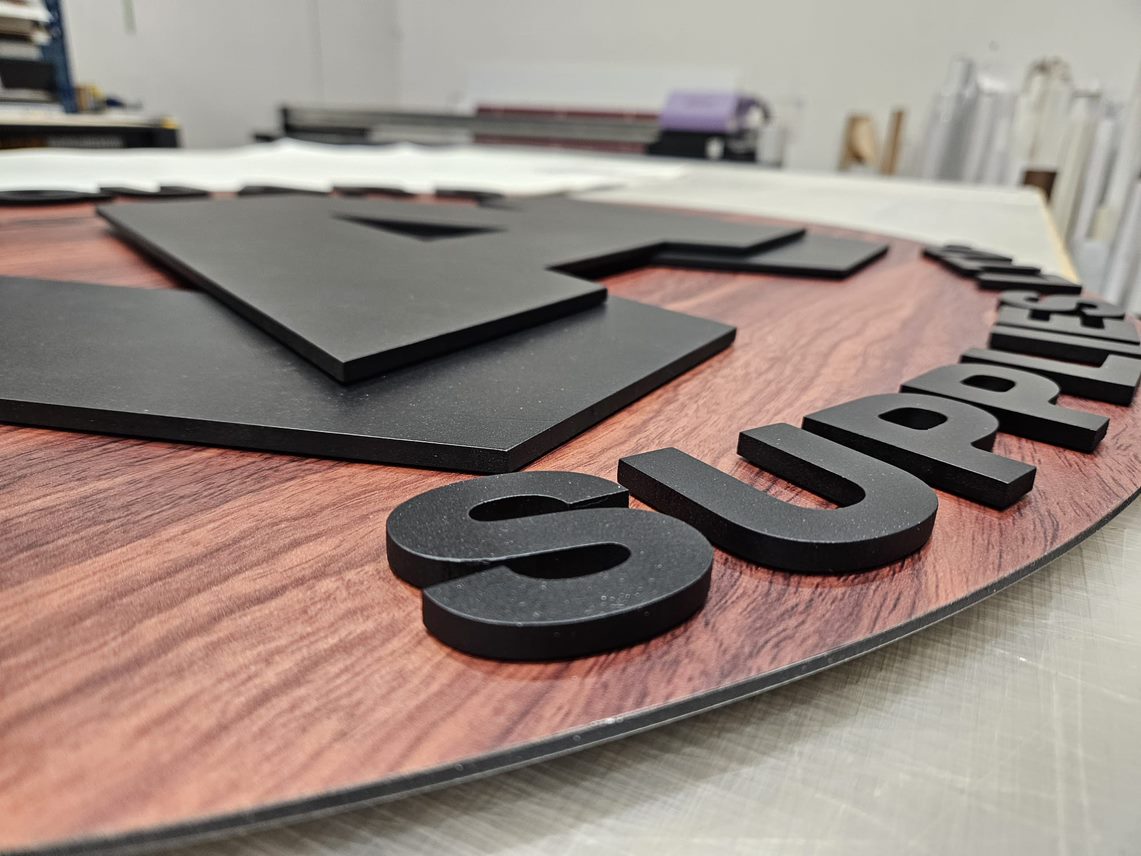
This versatile architectural finish comes in a glossy or matte version of virtually any type of wood finish you can think of, from alder and chestnut to rosewood and walnut and everything in between. It can be applied to ceilings, walls, elevators, partitions, doors, panels, columns, and even furniture.
We have helped clients transform ordinary walls into attractive retail displays by wrapping wood slats in a film that offers a different woodgrain finish. We can transform old furniture and cabinets into high-end features and help you create eye-catching accent walls in offices, retail spaces, or presentation centers. Contact us today to share your vision and learn how we can help it come to life.